
Low Stomach Acid vs. Excess Stomach Acid: Which Is Causing Your Indigestion?

Table of Contents
|
“Doctor, I had heartburn, so I took Gelpos, but my stomach became even more bloated, and I had sour-smelling burps. It must be due to excess stomach acid, so why is it getting worse?” |
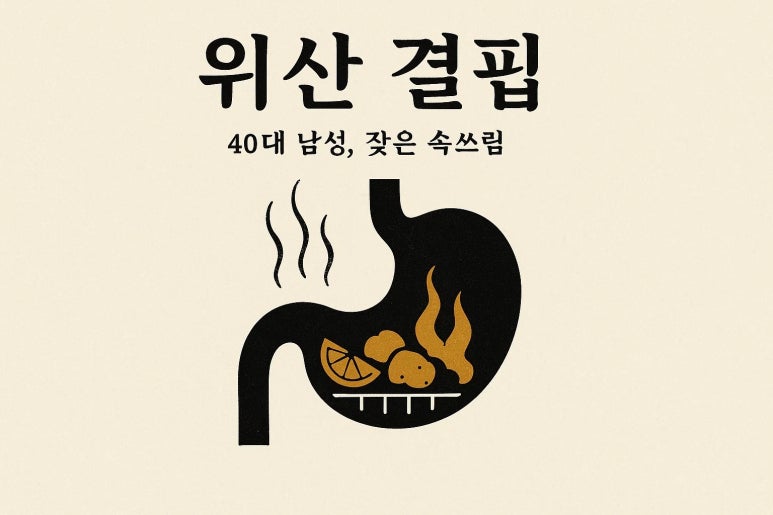
Mr. F, a man in his 40s, could not hide his bewilderment. He had been taking acid suppressants after being diagnosed with stress-induced gastritis, but his abdominal bloating and unpleasant burps persisted. He said that whenever he experienced heartburn, he would take Gelpos or Almagel, but he only felt better momentarily, and the symptoms seemed to worsen.
Stomach Acid is Not an 'Enemy,' But Our Body's 'Protector'
Many people automatically suspect excess stomach acid whenever they experience heartburn and reach for antacids. However, stomach acid does not merely play a role in digesting food. Stomach acid acts as the **primary defense line** sterilizing bacteria entering our bodies, and also as a **traffic light** regulating gastrointestinal motility. If there is insufficient stomach acid, food cannot be digested properly and remains in the gastrointestinal tract, beginning to putrefy.
|
Imagine your stomach as a 'furnace that processes food.' Excess stomach acid is like the fire being too strong, burning the area around the furnace, while insufficient stomach acid is like the fire being too weak, preventing food from cooking properly and causing it to rot. In this way, insufficient stomach acid actually produces gas and acid during the 'putrefaction' process, leading to reflux. |
The Irony of Insufficient Stomach Acid: Symptoms Similar to Excess Stomach Acid
Insufficient stomach acid is also known as 'pseudo-hyperacidity.' When stomach acid is insufficient, food digestion is delayed, causing the gastrointestinal tract to fill with gas. This gas pushes the stomach contents upwards, leading to reflux. Even a small amount of acid that flows into the esophagus at this time can irritate the esophageal lining, causing heartburn. This can be difficult to distinguish from heartburn caused by excess stomach acid. Furthermore, undigested proteins putrefy, which can cause unpleasant burps similar to the smell of rotten eggs.
💡 'My Own Self-Test': When you feel bloated or have chest discomfort after a meal, try dissolving half a teaspoon of baking soda in water and drinking it. If you don't burp within 3 minutes, or if the burp is very weak, it could be a sign of insufficient stomach acid. (Note: This test is for simple reference only, not for diagnosis.) |
Don't Suppress Blindly, Find the Root Cause
If you're constantly taking antacids for chronic indigestion, pause for a moment and reconsider whether your symptoms are truly due to excess stomach acid. If you mistake insufficient stomach acid for excess stomach acid and take antacids or acid suppressants, the already deficient stomach acid will be further suppressed, leading to a vicious cycle that completely impairs digestive function. This can also break down the stomach's primary defense line, increasing the risk of bacterial infections.
The true solution is not to suppress stomach acid, but to help it secrete normally. You should chew your food slowly and thoroughly during meals, perform light gastrointestinal exercises before eating, and normalize stomach acid secretion by restoring the balance of your autonomic nervous system through stress management. Your heartburn might not be the scream of excess stomach acid, but rather the whisper of insufficient stomach acid.