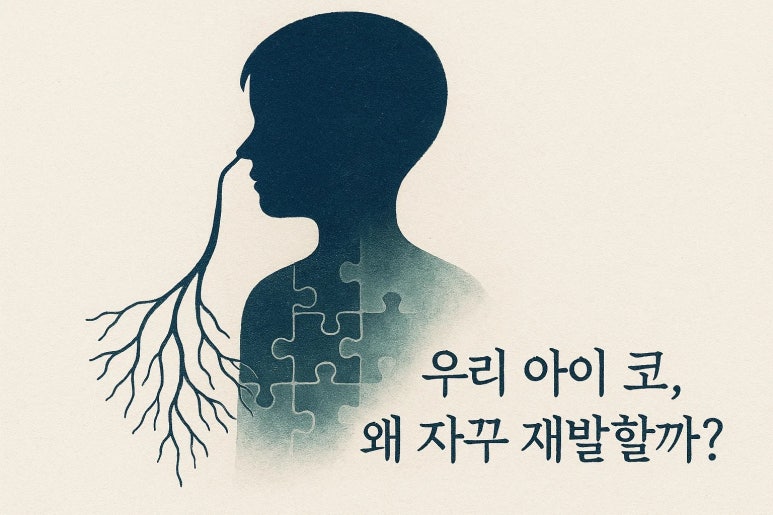

When Did Tic Disorder Become an Illness? – Diagnosis, Medication, and What We've Missed

Table of Contents
- 1. From Movements We Used to Overlook to Being Called a Disorder
- 2. The Origin of Tourette Syndrome – Georges Gilles de la Tourette
- 3. The Diagnostic System Created by the DSM – The Expansion of Pathology
- 4. Diagnoses Skyrocketed. The Actual Disease May Not Have Increased
- 5. The Shadow of the Dopamine Theory – Was Suppression the Answer?
- 6. The Sensory-Motor Loop – How Are Tics Created?
- 7. Korean Medicine Views It Differently – A Perspective of Flow and Balance
- 8. To Suppress or to Understand
1. From Movements We Used to Overlook to Being Called a Disorder
These days, many children exhibit behaviors like frequent eye blinking or sniffling and rubbing their nose. When asked "Is it just a habit?", doctors now say "It could be a tic disorder." And some are prescribed dopamine-regulating medications including antipsychotics. But was it always diagnosed this way in the past? While the concept of tics has existed since ancient times, categorizing them as a disease, establishing diagnostic criteria, and intervening with medication is surprisingly recent.
2. The Origin of Tourette Syndrome – Georges Gilles de la Tourette
The first to describe tics as a distinct disease category was 19th-century French neurologist Georges Gilles de la Tourette. In 1885, he observed several patients exhibiting complex muscle movements and vocal tics and published his findings as a paper. This paper became the origin of "Gilles de la Tourette Syndrome." However, at the time, the diagnostic concept of "tic disorder" was not yet widespread, and these symptoms were largely classified under neurosis, hysteria, or as part of a group of unusual symptoms. In short, they were considered rare and bizarre special cases.
3. The Diagnostic System Created by the DSM – The Expansion of Pathology
The period when diagnoses exploded was essentially after the 1980 DSM-III. From that point onward, tic disorders and Tourette's disorder began to be formally defined. Symptoms that had previously been grouped under schizophrenia, neurasthenia, or childhood behavioral disorders were now coded as "standalone diseases." The DSM's diagnostic system is fundamentally a statistical classification system. It does not address causes; rather, it diagnoses based on the repeated observation of observable symptoms. And importantly, the foundation of this system is "interference with social adaptation." So the same eye blinking could be just a habit when alone, but considered pathological during a school presentation. It is a structure that sees the behavior itself rather than the context.
4. Diagnoses Skyrocketed. The Actual Disease May Not Have Increased
The prevalence of tic disorders was estimated at less than 0.05% up until the 1980s. But now, including motor tics, 5~10% of all children are eligible for diagnosis. This is not simply a matter of it having "increased." It means the concept of the disease has expanded, and our "way of looking" at it has changed. Sociologists call this phenomenon "medicalization" or "diagnostic expansion." A structure in which the boundary between normal and abnormal steadily widens. And this expansion occurs in tandem with demands from society as a whole – the treatment market, the pharmaceutical industry, the school system, the evaluation system, and more.
5. The Shadow of the Dopamine Theory – Was Suppression the Answer?
The most widely used treatment for tic disorders to this day involves dopamine D2 receptor antagonist medications. Representative examples include risperidone, haloperidol, and aripiprazole. However, this treatment is based on the assumption that "tics = excessive dopamine activation." Surprisingly, this hypothesis solidified not on the basis of direct scientific evidence, but on the reasoning that "since there is a response, that must be the case."
Furthermore, many children experience psychological side effects or functional decline from these medications, such as reduced concentration, weight gain, and emotional flattening. While tics may decrease, the child's overall life can become more diminished.
6. The Sensory-Motor Loop – How Are Tics Created?
Another hypothesis explaining tic pathology has been gaining attention recently. It is the concept of the sensory-motor loop. Many children say things like, "My eyes felt itchy, so I squinted." "My throat felt stuffy, so I kept sniffling." Tics may be interpreted not as simple "involuntary movements," but as responses to relieve uncomfortable sensations. In other words: sensation → response → temporary relaxation → repetition → automation. Suppressing tics does not break that sensory-response loop; it can sometimes work to further entrench the tension.
7. Korean Medicine Views It Differently – A Perspective of Flow and Balance
Korean medicine approaches these movements through a completely different lens than Western medicine. Eye squinting can be described as internal stirring of liver wind, sniffling sounds as upward rebellion of lung heat, and shoulder twitching as liver qi congestion or inward invasion of wind. In other words, instead of suppressing the movement itself, it seeks to interpret the body's flow and context that made such movements inevitable. And when observing children who actually have tics, common patterns in sleep begin to emerge
imbalance, appetite fluctuations, decreased digestive function, emotional sensitivity, and sensory over-responsiveness. This means it is not simply a 'brain problem,' but is connected to a failure of the entire body's autonomic nervous system and sensory regulation.
8. To Suppress or to Understand
Ultimately, we stand at a crossroads of choice. Whether to suppress the movement called a tic, or to understand the context in which that movement was created. A tic is not merely a disease of the nerves. It is a 'reflex-response system' where everything is intertwined: what sensations the child feels, how the body responds to those sensations, and how society accepts that response. And I believe that the perspective held by Korean medicine is much broader, deeper, and softer.
Tics may sometimes look strange, but it could be the body's way of speaking when emotions cannot be expressed in words. Do we need to view this only as a disease? Could we perhaps change the question slightly?
'Why did this movement occur?' 'What is this child feeling right now?' These questions may be the very beginning of the treatment we must undertake, coming before medication and preceding diagnosis.
```