Healthy Growth: Is Pediatric Obesity Treatment Really Necessary?

For the healthy growth of our children, is “pediatric obesity treatment” really necessary? Deep concern is always contained in parents’ questions like this.
\n\n| \n “My 4th-grade son is much bigger than his peers. He’s tall, but I’m worried because he weighs a lot too. Should I see it as baby fat since he’s still growing, or should I see it as ‘pediatric obesity’ and start treatment already? I look up what he should eat and how he should exercise every single day, but there’s so much information that it’s confusing.” \n |
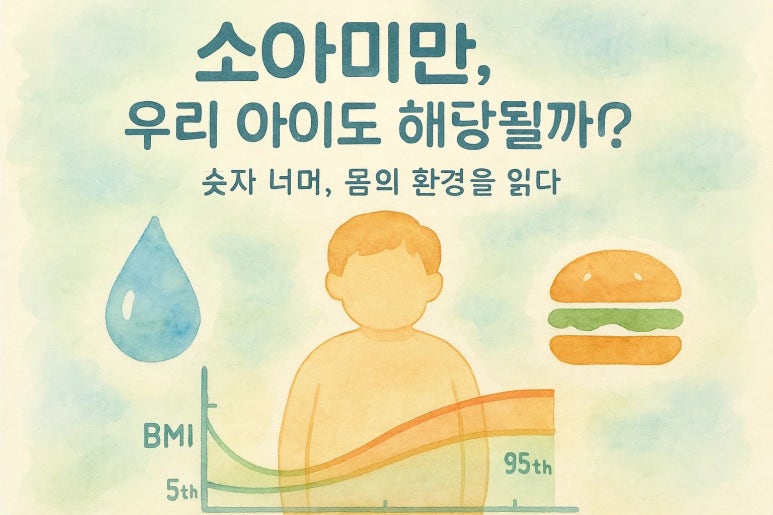
I meet many parents in the clinic who share the same concerns as Parent A. “Pediatric obesity” requires a more delicate approach than adult obesity because of the variable called ‘growth.’ Rather than focusing simply on weight numbers, it’s important to comprehensively understand the child’s growth stage, lifestyle habits, and how the body’s balance has been disrupted. Only by reading the ‘environment’ created by the child’s body can we set a sustainable direction for “pediatric obesity treatment” for healthy growth.
Reading the “Body’s Environment” in Pediatric Obesity: It’s Not a Simple Calorie Problem
Viewing an “obese child’s” body only as excessive calorie intake misses many parts. A child’s body constantly uses energy for growth and regulates hormonal balance. What’s important here is the ‘body’s environment.’ Factors like sleep quality, stress, imbalances in appetite-regulating hormones, decreased organ function, and the accumulation of Korean medicine waste products like “damp-phlegm” work in complex ways to worsen obesity.
Pediatric Obesity and the Principles of the “Body’s Environment” (Integrated Korean Medicine & Modern Science)
\n\n| \n The process of observing, interpreting, and practicing the principles of the “body’s environment” is as follows. First, an “obese child” may swell easily in the morning, feel thirsty frequently, and show strong preferences for certain foods (salty, sweet). A tendency to lack concentration or tire easily is also commonly observed. Interpreting this from a Korean medicine perspective, it can be seen as a state where “damp-phlegm” has accumulated, stagnating water metabolism and decreasing “Spleen and Stomach (脾胃)” function. Modern-medically, it is linked to increased insulin resistance, imbalances in stress hormones (cortisol), and disruption of growth hormones and appetite-regulating hormones (leptin, ghrelin) due to lack of sleep. Organ imbalances go beyond mere digestive function, lowering overall metabolic efficiency and causing surplus energy to be stored as fat. To correct this “body’s environment,” instead of just eating less and moving more, it must be accompanied by securing sufficient sleep, managing stress, improving gut health through right eating habits, and, from a Korean medicine perspective, removing damp-phlegm and strengthening organ function. \n |
Pediatric Obesity: Which Case Does Our Child Fall Into?
“Childhood obesity” has different environments and patterns for each child. You may be able to guess your child’s situation through a few hypothetical cases I’ve encountered in the clinic.
CASE 1: School-Aged Child Exposed to Late-Night Snacks and Stress (10-year-old girl)
\n\n| \n Observation: Due to school and academy schedules, she had a habit of returning home late at night and hurriedly eating late-night snacks. During exam periods, she sought out sweet foods more due to stress and frequently went to bed after 11 PM. Her waist circumference increased rapidly, and her body fat percentage exceeded 30%. Interpretation: Irregular meal times and late-night snacks lower insulin sensitivity, while lack of sleep disrupts growth hormone secretion and appetite control. Increased cortisol due to stress promotes fat accumulation. From a Korean medicine perspective, the balance between the Liver and Spleen/Stomach was broken, causing Qi and Blood circulation to stagnate and damp-phlegm to accumulate. Correction Points: The correction points for this child were to limit sugar intake at least 3 hours before dinner, prohibit smartphone use 1 hour before bed, and conduct light exercise (jump rope, walking) for more than 30 minutes, 3 times a week. Additionally, we attempted to remove “damp-phlegm” and regulate Liver-Spleen/Stomach functions through a Korean medicine approach. \n |
CASE 2: Toddler with Low Activity and Severe Picky Eating (6-year-old boy)
\n\n| \n Observation: He had low activity levels and was a very picky eater who preferred snacks and soda over rice. He had a tendency toward constipation, having a bowel movement only once every 2 to 3 days, and his stomach was always round and protruding. Interpretation: A lack of fiber intake and eating habits centered on processed foods cause gut microbiota imbalance and decreased digestive function. Korean medicine interpreted this as weak Spleen and Stomach function, preventing smooth digestion, absorption, and excretion, leading to the accumulation of “damp-phlegm” and blocked “Qi.” Correction Points: For this child, we recommended including at least one vegetable dish in every meal, consuming whole fruits as snacks rather than juice, and running and playing at the playground for at least 30 minutes every day. We also combined treatments to strengthen Spleen and Stomach function and promote bowel movements. \n |
“Growth period obesity” is an important issue that determines a child’s future health. Beyond simple weight loss, the focus must be on “obesity prevention” and forming healthy lifestyle habits.
How Should You Start a Healthy Eating Habit for Your Child?
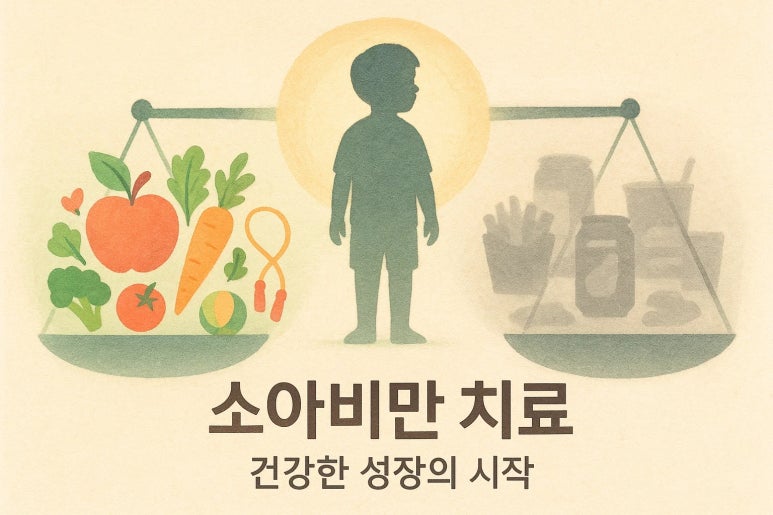
Vaguely telling children to \"eat a balanced diet\" doesn’t resonate with them. Specific guidelines are needed. First, ensure regular meal times, eating three meals a day at fixed times and allowing snacks only at designated times. Next, a low-sodium table is important, preparing primarily bland foods that highlight natural flavors because salt and sugar stimulate appetite and promote “damp-phlegm” creation. Also, ensure they drink plenty of water instead of soda or juice. Drinking “6 to 8 glasses” of water a day aids metabolism and provides satiety, preventing “overeating.” Finally, increasing protein and vegetable intake is important because sufficient protein needed for the “growth period” helps muscle growth and maintains satiety longer, while dietary fiber from vegetables aids digestion and improves “gut health.”
\n\n| \n Note: Increasing NEAT (Non-exercise Activity Thermogenesis)Children’s exercise does not need to be grandiose. It is important to increase movement in daily life, such as using stairs instead of elevators, walking one bus stop after school, or helping with household chores. This has the effect of increasing energy consumption naturally by raising NEAT (Non-exercise Activity Thermogenesis). \n |
How Can We Combine “Korean Medicine Treatment” and “Western Medicine Treatment”?
There are various approaches to “pediatric obesity treatment.” “Western medicine treatment” primarily relies on diet therapy, exercise prescriptions, and behavior modification therapy, with medication considered if necessary. “Korean medicine treatment” focuses on finding the body’s balance through customized prescriptions based on the child’s constitution and current body state (organ function, balance of “Qi, Blood, and Body Fluids,” and presence of “damp-phlegm”).
For example, for a child with severe edema and lethargy due to “damp-phlegm,” we may prescribe herbal medicine to remove dampness and boost energy. We also use safe herbs while considering the characteristics of school-aged children so as not to interfere with growth. The important point is that these two approaches can complement each other and create synergy. It’s about fundamentally improving the ‘body’s environment’ while objectively tracking changes through modern indicators.
\n\n| \n Caution/Warning: Risks of Reckless “Dieting”Applying the same “diet” standards as adults to children is very dangerous. It can cause side effects such as growth inhibition, nutritional imbalance, and eating disorders due to psychological pressure. Especially rapid weight loss can induce the “yo-yo phenomenon,” creating a vicious cycle that worsens obesity. \n |
| \n **Contraindications: Abuse of Unverified Folk Remedies and “Diet Medication”** Applying unverified folk remedies or adult “diet medication” to an “obese child” without consulting a medical professional is strictly prohibited. A child’s body is different from an adult’s and can cause unpredictable side effects or serious health problems. Treatment must always proceed using safe and verified methods in consultation with an expert. \n |
“Pediatric obesity” is not a problem a child can solve alone. Consistent interest and effort from parents are important, and the key is to improve the child’s “body’s environment” and foster “healthy eating habits” and “exercise” habits with professional help. Rather than short-term weight loss goals, the true path of “pediatric obesity treatment” is to find and solve the fundamental causes of growth-period obesity, helping the child become a healthy agent of their own life.
This case aimed to foster a deep understanding of “obesity prevention” and management during the important period of a child’s growth, providing a balanced perspective on both “Korean medicine treatment” and “Western medicine treatment.” In any treatment, please find medical professionals who will carefully examine the child’s entire body and become partners for healthy growth.