If Pediatric Rhinitis and Sinusitis Keep Recurring | Incheon Rhinitis Korean Medicine Clinic

If Pediatric Rhinitis and Sinusitis Recur | Incheon Rhinitis Korean Medicine Clinic
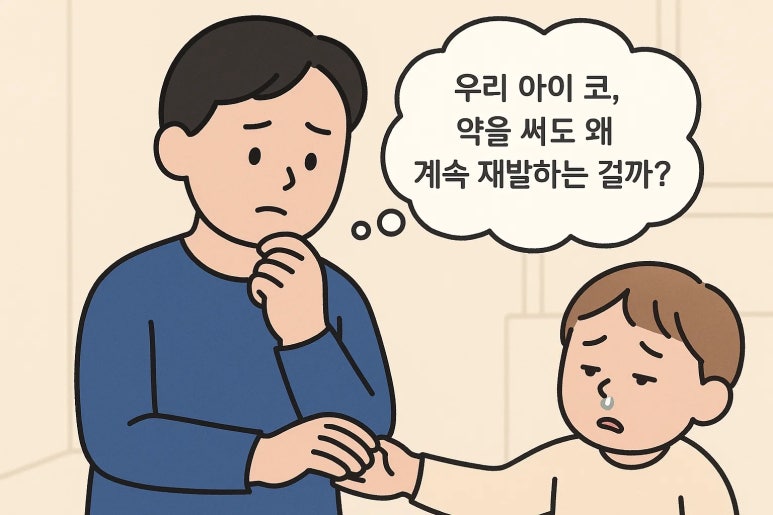
“Director, why does my child keep picking their nose, lose sleep due to nasal congestion all night, and always have a runny nose in the morning? Every time we go to the hospital, they say it is rhinitis or sinusitis. We take medicine and use sprays, so why does it keep recurring?”
This is one of the questions I hear most often in the consultation room. When a child's pediatric rhinitis and pediatric sinusitis lead to chronic recurrent rhinitis, parents often feel deep anxiety and a fundamental question arises: “What on earth is the problem with my child's nose?” Symptoms that appear on the surface, such as nasal congestion, runny nose, and sneezing, are easily noticeable, but in fact, these are merely one facet of a deeper story happening inside our body. Today, I would like to go beyond simply suppressing uncomfortable symptoms and put together the hidden puzzle of nasal health.
Signals from the Nose: Beyond Simple Discomfort
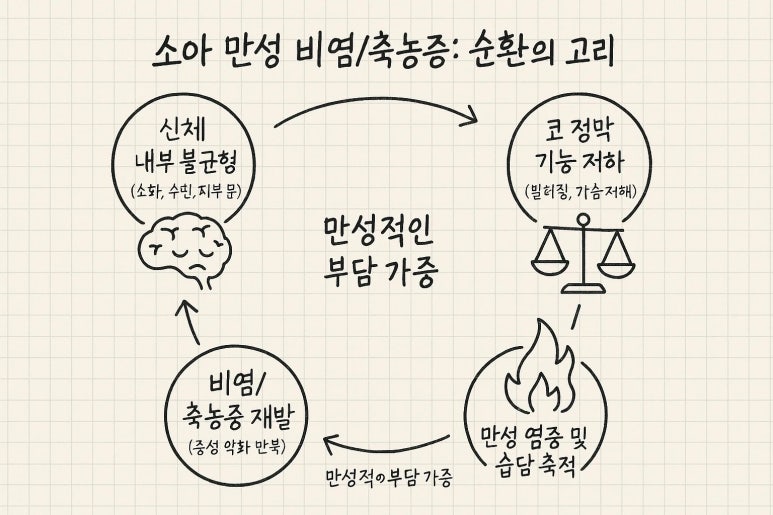
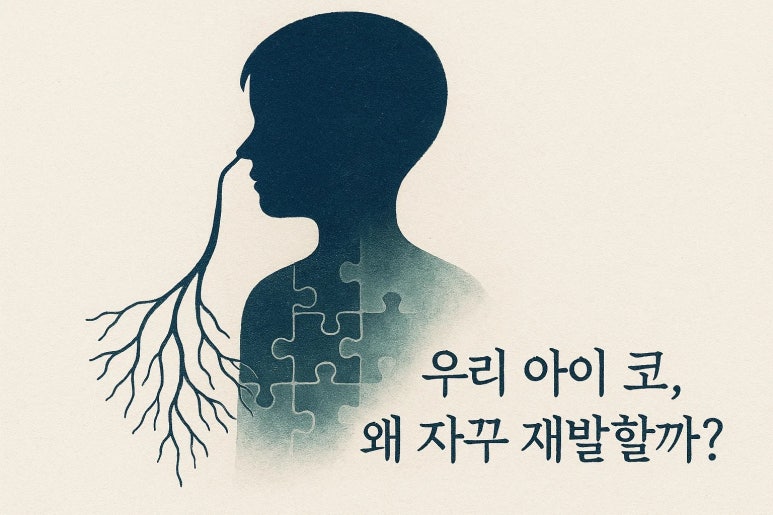
When I look at children's nasal symptoms, I do not look at the nose as a standalone organ. Just as one might imagine the roots and trunk of a whole tree by looking at the swaying of a small branch, nasal symptoms serve as important clues reflecting the child's overall physical environment and the balance of the immune system. Many parents, seeing their child suffer from childhood nasal congestion or childhood sinusitis, try various treatments in desperation. However, they often feel frustrated when symptoms restart as soon as the medication is stopped. Why does this repeat?
|
I am reminded of the story of 7-year-old Yuna (pseudonym), whom I treated. For 3 years, Yuna suffered from nasal congestion and yellow nasal discharge every winter, and when it was severe, she lost sleep due to coughing every night, which seemed to affect her growth. She always looked tired and had a poor appetite. Her mother expressed her frustration, saying, “At the hospital, they always just say it is 'allergic rhinitis' or 'sinusitis.' It is only okay for a while when taking medicine, and as soon as she is exposed to a cold breeze or friends catch a cold, she catches it immediately.” While the mother regarded Yuna's nasal problem as just a 'problem of the nose,' what I focused on was Yuna's overall digestive state and sleep patterns, as well as the dryness of the skin. These were important clues that the nose is not just a problem of the nose. |
As seen in Yuna's case, the nose is more than just a passage for breathing; it is the 'first gateway of immunity' and the 'front line that first encounters the external environment.' Not only does the nose function as a 'filter' to screen out foreign substances, but it also plays a crucial role in making the air entering the lungs warm and humid. However, rather than seeing the nose as a simple filter or passage, I more frequently use the metaphor that it is a 'passage of life' where the energy of the entire body flows and a 'small mirror' reflecting the child's internal environment. This metaphor emphasizes how closely the nasal mucosa is connected to delicate blood circulation, the complex nervous system, and the balance of the systemic immune system, beyond its function of simply purifying air. Sensory discomforts, such as the nasal mucosa stinging in a cold wind or the throat feeling scratchy in dry air, can be the first signals notifying us of changes inside our body. In other words, while the inflammatory response of the nose is a primary defense mechanism against external stimuli, it can also be a signal of internal imbalance. Listening to this signal is the first step toward finding the true health of our child.
A Journey to Find the Root: Constitutional Tendencies and Physical Environment
Then, where is the hidden background of the disease that keeps our child's nose uncomfortable? The insight I have gained from meeting children in clinical practice is that pediatric chronic rhinitis or recurrent rhinitis is difficult to explain simply by the presence of allergies or bacterial infections. The 'constitutional tendency' and 'physical environment' unique to each child play an important role. Then, what kind of constitutional tendency does our child have? Some children are congenitally prone to weak lungs and bronchial tubes, while others have a weak digestive system, leading to the accumulation of 'Seup-dam (phlegm-fluidity/濕痰)' in the body, which worsens nasal symptoms. Here, Seup-dam is a concept in Korean medicine referring to unnecessary moisture and waste products that are not properly discharged and remain stagnant in the body. Just as stagnant water that does not flow begins to rot, when Seup-dam accumulates in the body, it can more easily trigger inflammatory responses in the mucosa and exacerbate secretion problems such as runny nose and phlegm.
In Korean medicine, we focus on identifying these children's constitutional tendencies and optimizing each individual's physical environment. For example, in the 『Dongui Bogam』, nasal congestion is called 'Bi-saek (鼻塞)' and is explained not as a symptom limited to the nose, but as being related to functional abnormalities of the five viscera and six entrails (Ojang-yukbu), such as the lungs, spleen/stomach, and kidneys. This is strikingly similar to how we understand the correlation between gut health and immunity today. Just as a disruption in the balance of gut microbiota affects systemic immune function, classical medicine also viewed that symptoms appear in specific areas like the nose when the balance of the entire body is collapsed. I interpret the child's physical condition by fusing this classical wisdom with a modern perspective.
A Companion-like Approach for Sustainable Recovery
Pediatric rhinitis treatment and pediatric sinusitis management for a child's nasal health are like a long-distance marathon, not a short sprint. Simply suppressing symptoms as they occur is merely a temporary fix. The important thing is to cultivate the body's own power to recover.
To this end, I would like to ask parents a few questions. "Is our child sleeping well? Are meals regular and balanced? Are they having bowel movements well? Do you feel that their body is cold, or conversely, that they have too much heat?" Within these daily questions, the child's physical
Important clues about the child's
The key to pediatric rhinitis treatment and pediatric sinusitis management
lies in these three points.1. Understanding the child's whole body: Nasal symptoms reflect the overall physical condition. You need to examine all aspects of the child, including digestive health, sleep, skin, and emotional state.
2. Restoring balance to the immune system: It's not simply about "strengthening" immunity, but about achieving "balance" so the body responds appropriately to external stimuli without overreacting. This balance can be gradually achieved through herbal medicine treatment and lifestyle improvements.
3. Sustainable management habits: Daily small habits combine to positively transform the child's body. Beyond simply suppressing symptoms, the goal is to help the child build immunity on their own and find a healthy rhythm. Adequate hydration keeps mucous membranes moist and aids in waste elimination. Maintaining appropriate indoor temperature (2224°C) and humidity (5060%) protects the nasal mucosa, while a balanced diet and regular exercise are essential for systemic circulation and immune function activation. Small habits like a glass of warm water before bed or light stretching come together to create a sturdy foundation for the child's nasal health.
Honestly speaking, I cannot tell you that your child's chronic rhinitis or pediatric sinusitis will completely disappear overnight. Herbal medicine treatment and lifestyle improvements are gradual processes, and sometimes you may experience unexpected minor fluctuations. However, what I am certain of is that when parents understand their child's symptoms not as mere "illness" but as the body's way of communicating, and actively participate in the child's recovery journey, the most powerful healing force will be unleashed. For the sake of your child's healthy growth, I will always be a warm guide and companion by your side. Let us work together so that your child's small nose can be filled with healthy breaths, creating a vibrant tomorrow.