IBS-Induced Stomach Ache and Diarrhea After Drinking Soy Milk?

IBS-Induced Stomach Ache and Diarrhea After Drinking Soy Milk?
“My stomach hurts so much I keep going in and out of the bathroom” | IBS in Students
Have you recently experienced your stomach becoming uncomfortable after drinking soy milk to start the morning robustly?
Particularly, students or office workers who are ahead of important exams or taking care of their diet in busy daily lives often visit me with this problem.
\n\n| \n “Director, I drink soy milk every morning, and I think this particularly makes my stomach ache and makes me go to the bathroom. I’m already sensitive because of the exam, and at this rate, it’s really hard to concentrate on studying.” \n |
That was the story of Su-jin (pseudonym).
Su-jin was a student ahead of an important exam, and she often replaced meals with soy milk because of lack of time to eat.
However, on days she drank soy milk, without fail, abdominal pain and diarrhea symptoms appeared and she had to go in and out of the school bathroom.
Is soy milk the main culprit worsening Su-jin’s Irritable Bowel Syndrome (IBS)?
And is soy milk really a food harmful to gut health?
Let’s find the answer to this question together.
Uncovering the Relationship Between Soy Milk and IBS
Many IBS patients I meet in the clinic complain of discomfort after consuming certain foods.
Particularly for foods known as health foods like soy milk, they tend to be even more confused.
Starting from the conclusion, soy milk is not unconditionally harmful to all IBS patients.
However, certain components included in soy milk can induce symptoms in some sensitive people.
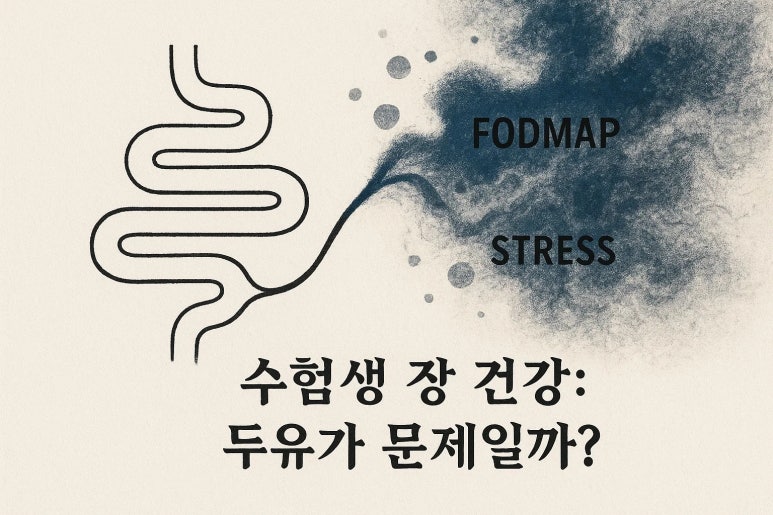
At the center of it is the ‘FODMAP’ component group.
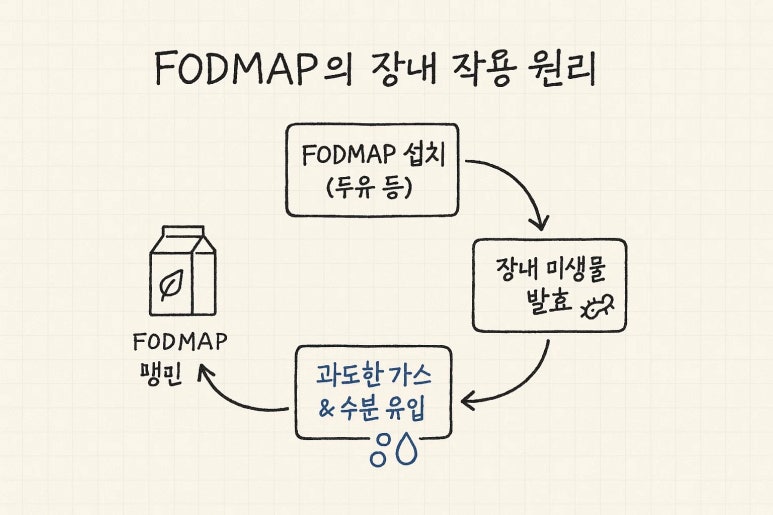
\n\n| \n FODMAP is an acronym for Fermentable Oligosaccharides, Disaccharides, Monosaccharides, And Polyols. These are not well absorbed in the gut and are fermented to create a lot of gas or pull water, inducing abdominal bloating, abdominal pain, diarrhea symptoms, etc. in IBS patients. The main ingredient of soy milk, beans, contains a large amount of a FODMAP component called galacto-oligosaccharides (GOS). As this component is fermented by gut microbes, excessive gas occurs and induces discomfort by increasing gut sensitivity. \n |
Not all soy milk is high in FODMAP content, and not everyone reacts to FODMAP identically.
Ji-hoon’s Story: The Importance of Soy Milk, FODMAP, and Individual Reactions

Let’s look at the case of another patient I treated, Ji-hoon (pseudonym), a 30s office worker.
\n\n| \n Ji-hoon was an IBS patient who even experienced difficulties during work due to chronic abdominal pain and diarrhea. At first, he thought dairy was the problem and quit milk and drank soy milk steadily, but he was frustrated as symptoms did not get better. Through precise meal log analysis and step-by-step dietary adjustment, we found that symptoms particularly worsen when he consumes soy milk made of regular soybeans. However, while maintaining a low-FODMAP diet, when he drank alternative drinks made of oats or rice, he felt much more comfort. Afterward, by consuming low-FODMAP certified soy milk in small amounts, he was able to find the amount suitable for himself and enjoy it healthily. \n |
Like Ji-hoon’s case, if symptoms like abdominal pain or diarrhea appeared after drinking soy milk, first, it is good to temporarily stop consumption and observe the body’s reaction.
Some might worry if IBS occurred because of soy milk, but it is more accurate to understand that soy milk does not directly induce the disease, but certain components give stimulus to an already sensitized gut.
Besides soy milk, stress is one of the main factors worsening IBS symptoms.
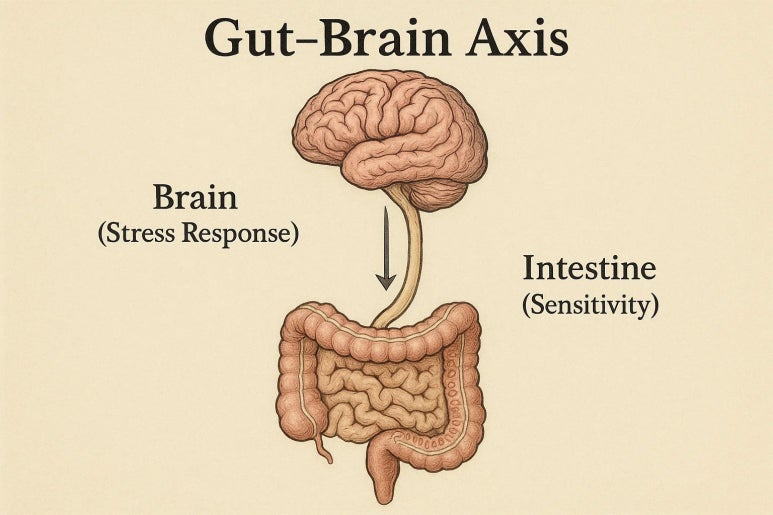
Particularly in periods when academic stress is high like students, the gut-brain axis becomes more sensitive, digestion process is hindered, and gut sensitivity can increase.
Thus, stress management becomes one of the core elements for gut health.
Soy Milk Consumption Guidelines for IBS Patients
Then, how should people with IBS consume soy milk wisely? Rather than simply thinking all soy milk is the same, a few things should be considered.
First, besides soy milk made of regular soybeans, there are various plant-based drinks made of oats, rice, almonds, etc. on the market. Among these, there are many products with low FODMAP content, so it is good to check the ingredients carefully and choose products with low-FODMAP certification.
\n\n| \n Generally, soybeans are high in FODMAP content, but soy milk can have lower FODMAP content as protein is filtered out during the manufacturing process. However, as there are large differences depending on the product, it is safe to prioritize products with the ’low-FODMAP’ certification mark. \n |
Along with this, adjusting the ‘amount’ of consumption is also important. No matter how much it’s low-FODMAP food, it can induce symptoms if consumed excessively. A ‘personal test’ is necessary, starting from small amounts and carefully observing how one’s body reacts and gradually increasing the amount. This is like watering a sensitive flowerpot. As the amount of water needed for each plant is different, our gut also has different sensitivities. Finding one’s ‘appropriate amount’ is the core.
Also, indiscriminate dietary restriction should be avoided. If you excessively restrict the entire diet out of fear of certain foods, it can rather result in nutritional imbalance and create a vicious cycle leading to IBS symptom worsening as anxiety grows.
\n\n| \n Rash judgment about certain foods or indiscriminate dietary restriction can result in nutritional imbalance and even intensify psychological anxiety. Be sure to closely observe your body’s reaction and, if necessary, plan systematic dietary management with the help of an expert. \n |
Journey of Finding One’s Own Gut Health Principle
IBS is not just a gut problem.
It is a symptom appearing as stress, lifestyle habits, and food eaten act complexly.
Rather than concluding ’good’ or ’bad’ for soy milk alone, an effort to understand what influence soy milk has on my gut in my entire context is necessary.
Even if it’s a bit cumbersome, I recommend writing one’s own meal log and recording symptom changes.
In that process, you will be able to find your own gut health principle and clue.
Maybe not soy milk but another stress factor was the problem, or only soy milk of a certain brand could have been the problem.
Eventually, all these processes are the practice of listening to small signals sent by our bodies and the journey of starting a conversation with oneself.
I sincerely hope everyone reading this communicates more deeply with their gut and regains a comfortable and energetic daily life.
And I will also continue to listen to these small voices of patients in the clinic and find the path together. Even if it’s not me, walking this journey with a medical team that can listen to the signals of the entire body will also be a good method.