
Ear fullness despite "normal" test results | Patulous Eustachian Tube

Table of Contents
- 1. Why does the ear feel 'blocked'?
- 2. The Eustachian Tube: A small but sensitive passage connecting the ear and throat
- 3. The problem of the 'ear that won't close'—Patulous Eustachian Tube (Eustachian Tube Dysfunction)
- 4. When the autonomic nervous system is impaired, the ears also become sensitive
- 5. Not just a simple ear problem, but connected to the craniofacial structure
- 6. The therapeutic meaning of small movements like moving the mouth and swallowing saliva
- 7. It might not be the ears, but a 'feeling that the entire body is blocked'
- 8. Treatment must start not with the 'ear' but with 'tuning the entire body'
Hello. This is Baekrokdam Korean Medicine Clinic.
1. Why does the ear feel 'blocked'?
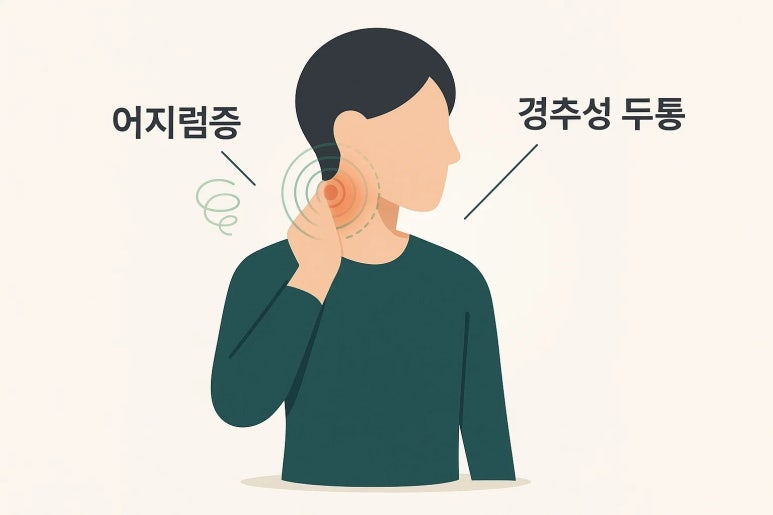
Have you ever experienced a sudden feeling of fullness or muffled hearing in your ears?
It is not that you hear less, nor does it hurt, but there is a feeling of being tightly blocked inside.
Patients often describe it like this: "It feels like my ears are submerged in wind." "It feels tightly blocked, like when I have motion sickness." "The area behind my ears feels tight, and it feels like it's echoing inside."
Where do these symptoms come from? Is it a cold? Is the ear blocked?
2. The Eustachian Tube: A small but sensitive passage connecting the ear and throat
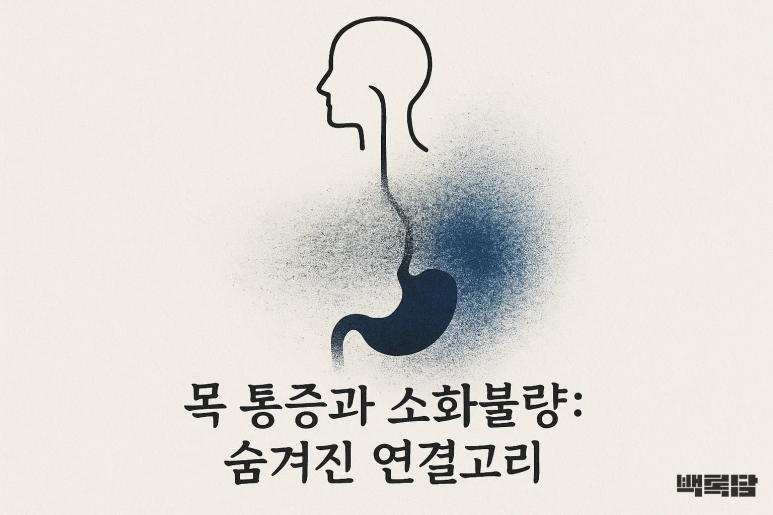
Inside our ears, there is a thin tube called the 'Eustachian tube.'
This is the path that connects the middle ear—the space inside the eardrum—to the throat.
It is usually closed and opens when we swallow saliva or yawn.
It is the structure that 'clicks' open when you chew gum or swallow saliva when your ears feel muffled on a plane.
Although the Eustachian tube is a very short and thin structure, if a problem occurs here, the pressure inside the ear cannot be regulated, resulting in a muffled feeling.
3. The problem of the 'ear that won't close'—Patulous Eustachian Tube (Eustachian Tube Dysfunction)
When people feel their ears are blocked, they often think, "Isn't something blocking it from the inside?"
However, in reality, it is often caused by the Eustachian tube being abnormally 'open.'
This is called 'Patulous Eustachian Tube.'
In this state, the ears feel more muffled when swallowing, one's own voice echoes inside the head, and the ears feel more bothersome in silence.
Patulous Eustachian Tube often occurs during weight loss, dehydration, chronic fatigue, or states of excessive tension.
And above all, it is commonly accompanied by a state where the autonomic nervous system has become sensitive.
4. When the autonomic nervous system is impaired, the ears also become sensitive
The action of opening and closing the Eustachian tube cannot be controlled intentionally.
Things like the expansion of the mucosa, the tension of surrounding muscles, and the rhythm of breathing regulate it automatically.
The autonomic nervous system is responsible for all of this.
However, if stress, overwork, anxiety, and tension persist, this autoregulation breaks down.
The mucosa and muscles around the ear may become excessively tense or, conversely, become lethargic, causing the tube to open when it should not or fail to close when it should.
5. Not just a simple ear problem, but connected to the craniofacial structure
Looking deeper, this is not just an ear problem.
The Eustachian tube is closely connected to the temporomandibular joint, hyoid bone, pharynx, and cervical muscles.
For example, the habit of clenching the jaw, neck tension, poor posture, and abnormalities in the swallowing motion can directly affect the function of the Eustachian tube.
Ear blockage symptoms often occur especially when the muscles around the jaw are excessively tense, the hyoid bone does not descend well, or the front neck muscles are chronically pulled.
6. The therapeutic meaning of small movements like moving the mouth and swallowing saliva
In Korean medicine, there is a simple self-care method called 'Gochibeop (叩齒法).'
This is a method of stimulating the facial and pharyngeal areas through repeated motions of clicking the teeth together and swallowing saliva.
Surprisingly, these simple movements help move the fine muscles around the Eustachian tube, stabilize the autonomic nervous system through the swallowing reflex, and promote the circulation of Qi and blood around the ears.
Similar mechanisms exist in Western visceral manipulation. It is a method of releasing tension in the esophagus or hyoid bone and relaxing the jaw and pharynx.
7. It might not be the ears, but a 'feeling that the entire body is blocked'
Although you say your ears are blocked,
If we listen more closely to how patients describe it, this is what they say.
"It's not my ear — it feels like something is stuck on the inside."
"Energy doesn't flow from my neck to my head."
"Everything feels blocked and squeezed tight."
Blocked ears are in fact a 'signal.'
It can be a result of the body's overall circulation, tension, or autonomic nervous system being off track.
8. Treatment must start not with the 'ear' but with 'tuning the entire body'
Whether it's eustachian tube patency issues or ear fullness, simply examining the inside of the ear and stopping there is insufficient.
One must look at the patient's autonomic nervous system state, facial tension, posture, and degree of physical recovery.
In Korean medicine, such states are interpreted as 'giheo (Qi deficiency),' 'giche (Qi stagnation),' 'dameum jeongche (phlegm-dampness accumulation),' and treatment is carried out by restoring circulation, adjusting structure, and lifting the body's energy.
Behind the small, vague symptom of 'my ears feel full' lies a rather complex, whole-body story.
Korean medicine picks up on and addresses exactly that.
#EarFullness #Tinnitus #EustachianTubePatency