Why Anxiety Disorder and Depression Come Together

Table of Contents
- Why Anxiety and Depression Often Co-occur — And How to Break Free
- 1. “I Experience Severe Mood Swings”
- 2. Anxiety and Depression Come Together — And Fuel Each Other
- 3. It Looks Like Mood Swings, But It's Actually Sensory Fluctuations
- 4. The Second Arrow — What Fuels Emotions Isn't Emotion Itself
- 5. ACT Speaks Like Buddhism — Separate Emotions from the 'Self'
- 6. Don't Try to Eliminate Emotions; Be With Them
- 7. Pain Is Not an Arrow. Reaction Is the Arrow.
Why Anxiety and Depression Often Co-occur — And How to Break Free
1. “I Experience Severe Mood Swings”
Many people say this:
“My mood changes too often. Several times a day, I fluctuate between euphoria and despair, start something only to want to give up on everything, and even when talking to people, I suddenly want to be quiet.”
And then they add:
“Could I possibly be bipolar?”
That's possible. But what's more common is being caught in a wave of emotions created by anxiety and depression together. It's not because you have a weak personality or poor mental resilience. You might be trapped in a structural sensory loop.
2. Anxiety and Depression Come Together — And Fuel Each Other
Over half of patients with depression also experience anxiety. Among those diagnosed with anxiety disorders, half report depressive symptoms. These two may seem like different illnesses, but in reality, they are neighbors that fuel each other.
Anxiety tenses you up, exhausts you with excessive sensitivity and nervousness, and that exhaustion leads to helplessness and a sense of meaninglessness. That is depression. And depression tells you:
“You can't do anything,” “People will dislike you too.” These thoughts summon anxiety again.
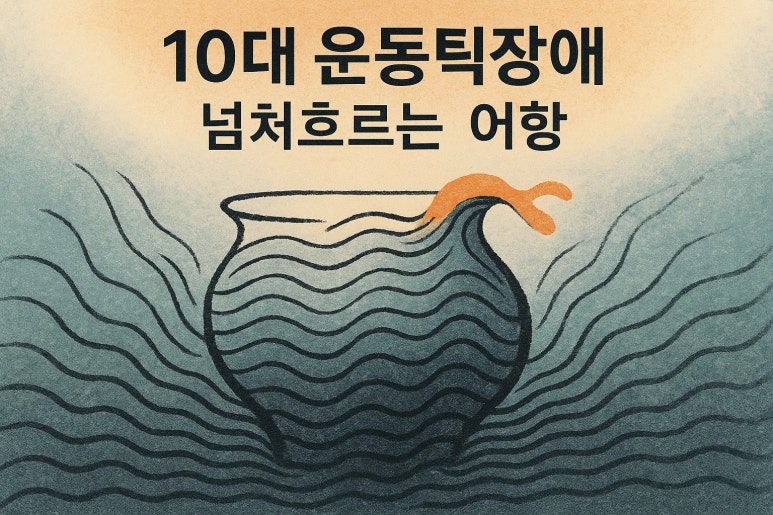
“What if I break down again?” “What if I return to that state?” This is an emotional feedback loop. Anxiety and depression alternate, shaking your emotions, and you begin to feel as if you are riding those waves.
3. It Looks Like Mood Swings, But It's Actually Sensory Fluctuations
People think of themselves as "moody people." But upon closer examination, it's often a repeating pattern of autonomic nervous system over-arousal and exhaustion.
Some days, you're overly vigilant, some days, you want to shut everything down, and you feel good for a moment before collapsing. This isn't a personality issue, but rather the brain interpreting emotions when the sensory system is unstable. Are those emotions the real 'you'? They might just be passing waveforms.
4. The Second Arrow — What Fuels Emotions Isn't Emotion Itself
Buddhism states this:
“Painful emotions are the first arrow. Resisting those emotions, attaching meaning to them, and fearing them is the second arrow.”
The first arrow is physical tension, a racing heart, and chaotic thoughts. The second arrow is the interpretation and resistance to these as "strange," "a big problem," or "something that must stop." Modern psychotherapy says the same thing:
Don't try to eliminate emotions. Stay with the fact that emotions arise.
5. ACT Speaks Like Buddhism — Separate Emotions from the 'Self'
Acceptance and Commitment Therapy (ACT) tells us to distinguish between our emotions and ourselves. Not "I am anxious," but → "I am experiencing anxiety right now." Not "I am depressed," but → "Depression is present within me right now." You are not the emotion itself. You are the very consciousness that remains where emotions pass through.
In Buddhism, this is called the 'observing self,' and in ACT, it's referred to as the 'self-as-context.' While these two approaches use different language, they point in exactly the same direction.
6. Don't Try to Eliminate Emotions; Be With Them
Many people look for ways to reduce emotions: "How to stop anxiety," "How to alleviate depression." But the more they do so, the stronger emotions become. This is because emotions tend to feel more threatening the more they are suppressed.
We shouldn't try to escape from emotions, but instead allow them to pass through us. Anxiety can arise. Feelings of depression might surge like waves. But in that moment, the realization that "this emotion can soon disappear," and the distancing from it, "this emotion is not me," can move you outside the loop.
7. Pain Is Not an Arrow. Reaction Is the Arrow.
We do not suffer because of emotions. Suffering is amplified by our interpretation of and reaction to emotions. Anxiety, depression, mood swings—these are not names that define us. They are passing sensations. They are pathways remembered by the body.
But memories can be reconfigured. Loops can be redesigned. Buddha said:
“Do not name the passing wind. The wind does not speak of you.”
So, when emotions arise, you don't have to call them 'you.' Just let them pass.
#AnxietyDisorder #Depression #AnxietyDisorder #Depression #IncheonAnxietyDisorder #IncheonDepression