
Why do I often get indigestion?

Table of Contents
- What Does it Feel Like to "Have an Upset Stomach"?
- Why Do Some People Frequently Experience Upset Stomachs?
- ① When the stomach doesn't stretch properly – Impaired Gastric Accommodation
- ② Slow Gastric Emptying – Gastric Stasis
- ③ When the Stomach is Overly Sensitive – Visceral Hypersensitivity
- ④ Impact of Stress and the Autonomic Nervous System
- ⑤ Food Types and Lifestyle Habits
- Is This a Symptom That Can Be Ignored?
- What is the Traditional Korean Medicine Perspective?
- The Sensation of "Having an Upset Stomach" is a Signal From Your Body
Everyone says they "have an upset stomach," but what does that really mean?
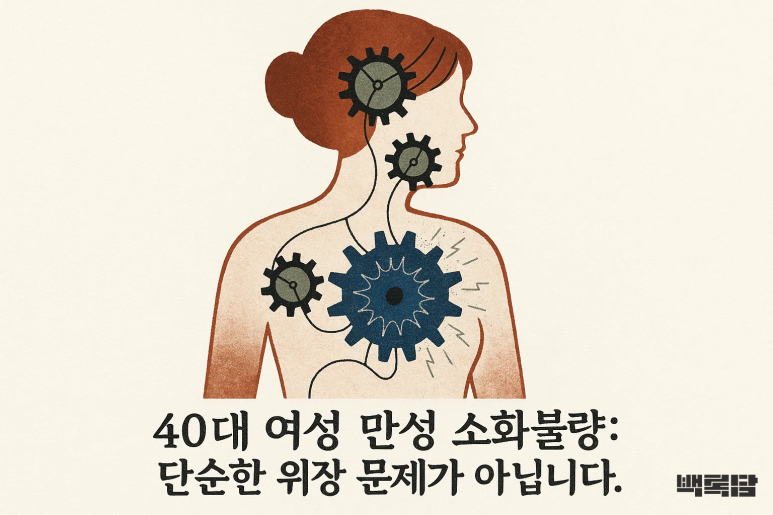
Everyone, you've probably said something like this at least once: "Oh, I think I have an upset stomach again..." That feeling of bloating, frequent burping, and a sensation of something stuck in your stomach. But what exactly does the expression 'having an upset stomach' refer to? And if it happens repeatedly, is it okay to just ignore it? Today, we're going to talk about exactly this.
What Does it Feel Like to "Have an Upset Stomach"?
Having an upset stomach means feeling as though the food you've eaten isn't digesting properly and is lingering in your stomach. Some people describe it as a tightness in the pit of their stomach, while others experience nausea after meals and constant burping. Some even say it's hard to lie down, that food feels stuck, or that they feel like vomiting in severe cases. The common thread among all these is "discomfort from something stagnant in the stomach."
Why Do Some People Frequently Experience Upset Stomachs?
Is it simply due to eating too quickly? Not necessarily. Let's explore some of the common reasons why people frequently experience upset stomachs.
① When the stomach doesn't stretch properly – Impaired Gastric Accommodation
Normally, after a meal, the stomach should gently stretch like a balloon. However, for some, this doesn't happen properly. Even after eating a small amount, they feel completely full, quickly develop an upset stomach, and experience shortness of breath. The sensation of "my stomach still feels full of food" is a phenomenon caused by the stomach's inability to accommodate food normally.
② Slow Gastric Emptying – Gastric Stasis
A normal stomach usually empties most of its food into the intestines within 2-3 hours after a meal. However, if gastric motility slows down, food remains in the stomach for longer. As a result, you might often say things like, "My stomach still feels bloated hours later" or "It feels like food is still in my stomach until morning." While this can be temporary, if it recurs chronically, it may be classified as 'functional dyspepsia'.
③ When the Stomach is Overly Sensitive – Visceral Hypersensitivity
Tests might show normal stomach acid levels, and gastroscopy results appear fine. Yet, some people repeatedly feel like they have an upset stomach, right? This occurs because the stomach itself is overly sensitive, generating exaggerated sensory signals even with a small amount of stomach acid secretion or food intake. Cases like "I ate the same as everyone else, but only I got an upset stomach" fall into this category.
④ Impact of Stress and the Autonomic Nervous System
When you're tense, your appetite drops, you feel heartburn or like you're going to vomit before an important event, or you feel like you can't digest food at all even after eating. This isn't a primary stomach issue, but rather because the autonomic nervous system has sharply suppressed digestive function. Simply put, your body is currently focusing more on 'tension mode' than on digestion.
⑤ Food Types and Lifestyle Habits
Greasy foods, overeating, late-night meals, fast eating, carbonated drinks... all these can disrupt the stomach's digestive rhythm. Especially for those who have difficulty digesting fats, eating meat or fried foods once can lead to several days of discomfort. The statement, "I always get an upset stomach after eating meat, so I can't eat anything else that evening," is common, and this can also occur when there's a deficiency in bile or pancreatic digestive enzymes.
Is This a Symptom That Can Be Ignored?
Occasionally having an upset stomach once or twice can happen to anyone. However, caution is needed in these cases:
- Indigestion persists for more than a week
- The feeling of an upset stomach recurs even after just drinking water
- Tightness in the pit of the stomach persists even with reduced food intake
- You frequently wake up due to stomach discomfort during sleep
For these individuals, it's important to consider not just a simple temporary upset stomach, but also the possibility of functional dyspepsia, chronic gastritis, or acid reflux.
What is the Traditional Korean Medicine Perspective?
In Traditional Korean Medicine, frequent indigestion is often viewed as:
- A state where the vital energy (Qi) of the Spleen and Stomach is weak, leading to diminished digestive and transformative function of food (Spleen Qi Deficiency).
- A state where Qi is constrained or stagnant, causing blockage and stasis in the stomach and intestines (Qi Stagnation).
- A state where Dampness-Phlegm covers the stomach, causing food to linger (Phlegm-Fluid Retention).
The core of the treatment is not simply addressing the stomach, but restoring the digestive rhythm itself.
The Sensation of "Having an Upset Stomach" is a Signal From Your Body
Having an upset stomach is not just something to dismiss as "I overate." Especially if it recurs, it could be a sign that your stomach is not ready to recover. We eat food every day, and digestion is a constant process. If that process isn't comfortable, the quality of your daily life will ultimately decline. If you frequently experience upset stomachs, it's time to understand that pattern and consider lifestyle changes that can help your stomach recover.