IBS-Relieving Tea, Will It Help?

Many people suffer from Irritable Bowel Syndrome (IBS). Have you ever suddenly stopped walking because your stomach became uncomfortable every morning or before an important appointment?
\n\n| \n \"Really, my stomach feels like it twists from time to time. Even when I go to the bathroom, it’s not refreshing, and gas keeps filling up, making the waist of my pants stifling. What on earth should I eat to be okay?\" I frequently hear the voices of such IBS patients in the clinic. \n |
IBS, It’s Not Just Your Story
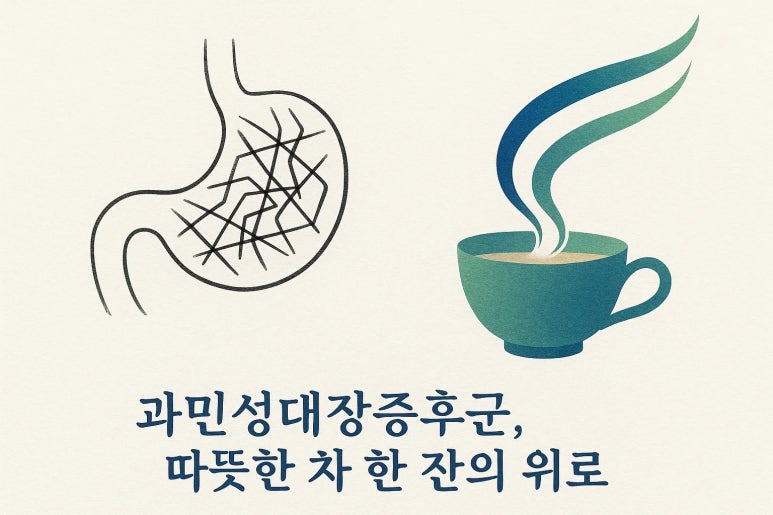
Like this, Irritable Bowel Syndrome (IBS) is a common functional gastrointestinal disorder that greatly lowers our quality of life. Particularly, prevalence is high among 20s to 40s young office workers, and stress and irregular lifestyle habits are often pointed out as main causes. Frequent abdominal pain, diarrhea, sometimes constipation, and unending gas make daily life uncomfortable and restrict social activities. In such pain, what many people naturally seek is herbal tea. They have expectations if a cup of warm tea can go beyond simply warming the body and soothe the weary gut and bring mental stability.
\n\n| \n Ji-hoon (pseudonym), a 30s office worker, was a typical IBS patient whose gut trouble worsened ahead of important meetings or presentations. He said it was not just once or twice that he broke out in cold sweat due to sudden abdominal pain and diarrhea on the subway while commuting after breakfast. He felt even more stifled as there was no special abnormality even if he received examination at the hospital. Then, as he started to drink warm chamomile tea steadily as I recommended, he confessed that tension was relaxed and he was able to sleep a bit more comfortably at night. Of course, symptoms didn’t disappear completely, but the time drinking tea itself became a ritual to take care of himself, so he found psychological stability and received help in symptom alleviation. \n |
Why Does Herbal Tea Make the Gut Comfortable?
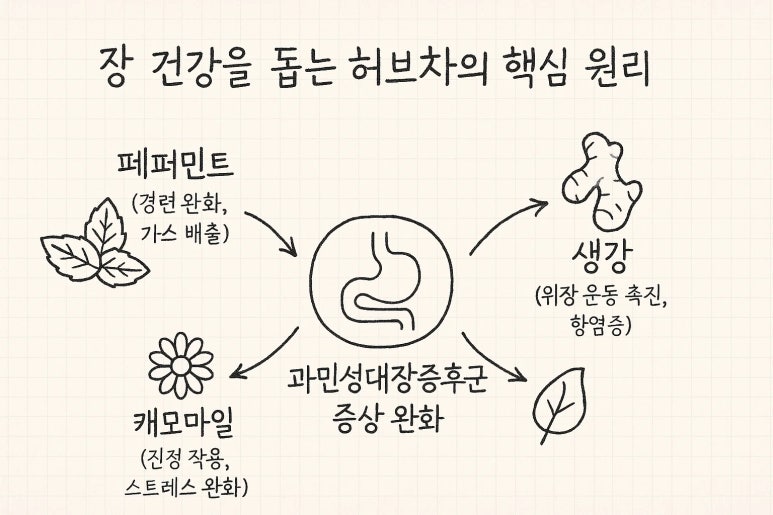
Why can certain teas be helpful for those suffering from IBS like Ji-hoon (pseudonym)? Our gut is an organ much more sensitive than thought. Due to stress, irregular eating habits, or certain food components, gut sensitivity increases, and as abnormality occurs in gut motor function, symptoms like abdominal pain, gas, diarrhea, or constipation appear. Plant-based compounds included in certain herbal teas can calm such sensitized gut, reduce inflammatory reactions, and aid digestive juice secretion, contributing to digestion function improvement. Particularly, warm temperature is effective in aiding gut blood circulation and alleviating cramps.
\n\n| \n I explain core principles of herbal tea helping gut health. First, peppermint tea is known to alleviate gut muscle cramps, reduce pain, and aid gas discharge through menthol, its main component. According to research, peppermint oil is known to be effective in IBS symptom alleviation. Next, ginger tea has warm nature and helps promote gastrointestinal movement and calm nausea. Also, it has anti-inflammatory effect and can contribute to reducing gut inflammatory reactions. Lastly, chamomile tea is effective in stabilizing the nervous system and alleviating stress with its excellent soothing action. This can be particularly useful in managing IBS symptoms worsened due to stress. \n |
Journey to Find the Tea Suitable for Me
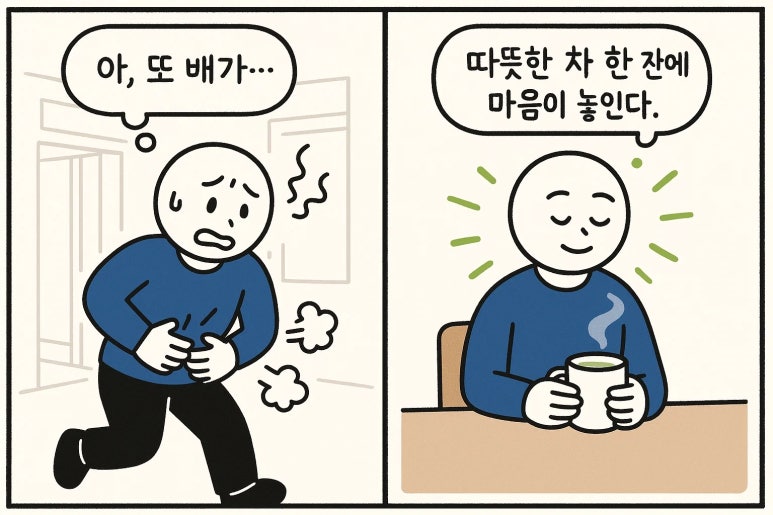
However, not everyone sees the same effect from the same tea. Teas that fit might differ depending on each person’s constitution and mainly appearing symptoms. For example, ginger tea may be more effective for those complaining of indigestion and cold stomach, and chamomile tea may be more helpful for those who are nervous and accompanied by anxiety. I always tell patients to start with a small amount for any tea and carefully observe how their body reacts.
\n\n| \n I inform you of cautions when consuming herbal tea. Herbal tea is a natural-origin component, but it can induce side effects if consumed excessively or if you have a certain disease. For example, peppermint tea can worsen symptoms if you have gastroesophageal reflux disease, and ginger tea can affect blood coagulation, so those taking anticoagulants should be careful. Chamomile also is a tea to avoid for those with Asteraceae allergy. Also, tea is only a supplementary management method helping IBS symptom alleviation, and it may not be a fundamental treatment. If symptoms are severe or last for a long time, it is important to surely consult with a medical professional for accurate diagnosis and treatment. \n |
| \n I give tips for gut health management with tea. Besides warm tea consumption, improvement of lifestyle habits for gut health is essential. Sufficient sleep, regular exercise, stress management techniques (meditation, yoga, etc.), and individual customized dietary adjustment such as low-FODMAP diet can see even greater effects in IBS symptom management when implemented complexly. Even if it’s not me, it is important to establish your own recovery plan with a medical team that closely looks at the entire body. \n |
Continuous Walk for Recovery
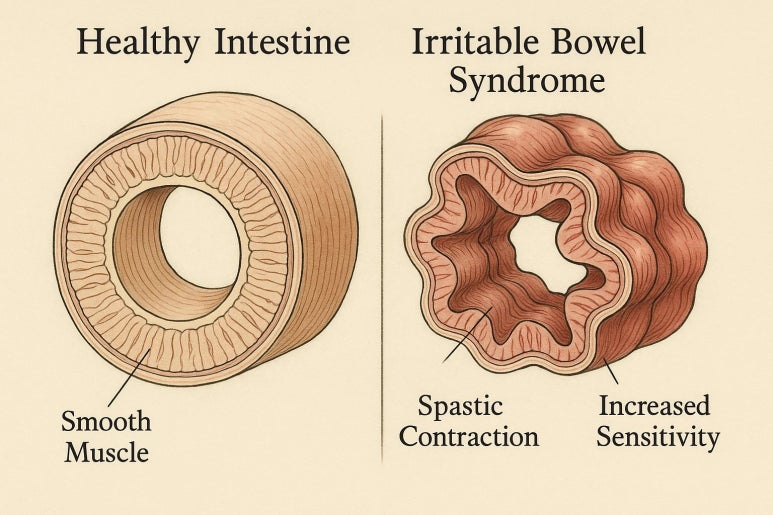
Honestly speaking, IBS is not an easy problem solved at once with one or two methods. However, I sincerely hope that many people suffering from this disease find small comfort and hope in daily pain through small changes suitable for themselves, for example, the habit of drinking a cup of warm tea. The gut is deeply connected with emotions enough to be called ’the second brain’ of our body. So please do not get exhausted, listen to your gut, and find your own path of recovery with patience. I hope this post becomes a small lamp in that journey.