Constantly Getting Indigestion? What's Behind the Feeling Your Stomach Has Stopped?

Frequent Indigestion: What's Behind the Feeling Your Stomach Has Stopped?
|
“I got indigestion even though I barely ate anything. I only had a salad for breakfast, but I felt completely bloated all afternoon and kept burping. It feels like my stomach has just stopped.” |
Ms. D, a working woman in her 30s, complained of discomfort. She said that because she's usually susceptible to stress, she invariably experiences 'indigestion' whenever she has an important presentation or frequent late nights at work. The symptoms occurred even when she didn't eat particularly greasy or hard-to-digest foods, and taking over-the-counter digestive enzyme supplements or antacids only provided temporary relief.
Is 'Indigestion' Not a Food Issue, But a Problem with Stomach 'Movement'?
We usually think that when we have indigestion, food is stuck in our stomach. Of course, there is simple indigestion caused by overeating. However, as in Ms. D's case, if you feel full or bloated even after eating easily digestible foods, it might not simply be a food issue. The real cause is likely that the stomach itself is not 'moving properly.' In traditional Korean medicine, this phenomenon is sometimes referred to as 'Dam-eum' (Phlegm-Fluid Retention), which signifies a state where stagnant waste products accumulate in the body and hinder circulation.
|
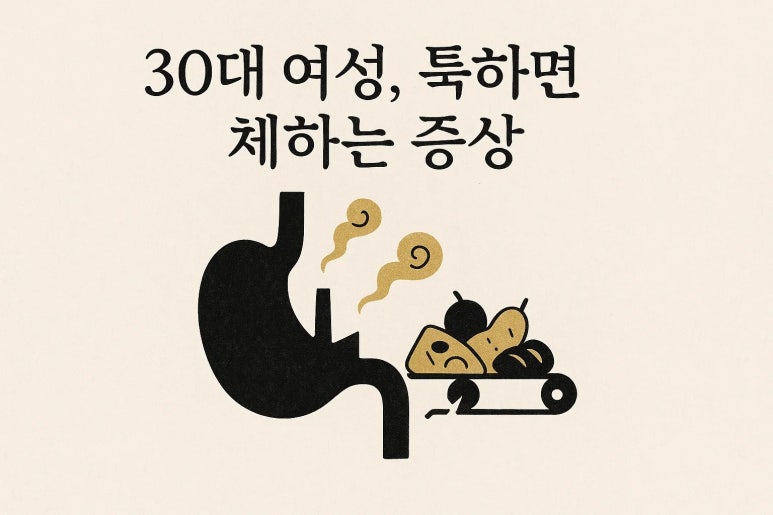
Imagine your stomach as a 'factory conveyor belt' that moves food to the next stage. If this conveyor belt breaks down or moves too slowly, food cannot proceed to the next process and accumulates in the stomach. This is precisely what we feel as that discomfort or 'indigestion.' |
How Stress Stops Your Stomach
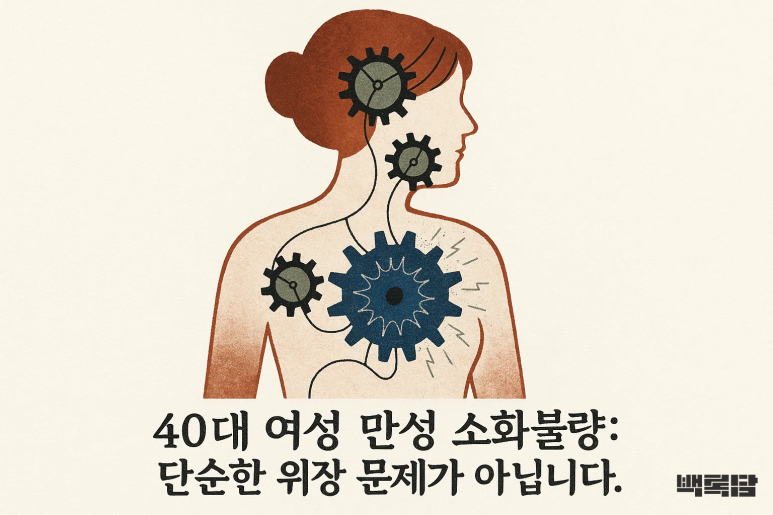
So, why does this conveyor belt, responsible for stomach movement, break down? The root cause lies in the autonomic nervous system. When our body is in a stressful situation, it activates the sympathetic nervous system, switching on 'survival mode.' At this time, the functioning of the parasympathetic nervous system, which is responsible for digestion, is suppressed. This is like in an emergency, all power is concentrated on essential systems, while secondary systems (digestive function) shut down.
Modern people suffering from chronic stress have impaired parasympathetic nervous system function. Since the accelerator pedal for digestion, which should be activated with rest, isn't working, the stomach moves sluggishly and cannot send food to the small intestine in a timely manner. In modern medicine, this condition is called ‘Delayed Gastric Emptying.’
💡 Digestive Aids Cannot Fix a 'Stopped Conveyor Belt.' Over-the-counter digestive enzyme supplements only provide tools to break down food; they don't solve the problem of stopped stomach movement itself. This is precisely why digestive aids only offer temporary relief. |
Conclusion: You Must First Relieve Body Tension
Frequent indigestion and the feeling that your stomach has stopped are not simply problems caused by a 'weak stomach.' These are the results of psychological factors like stress and instability directly affecting physical stomach movement. Your stomach has the power to move on its own. To allow your stomach to function properly, you must first relieve the 'tension' that hinders its power.
If you want to escape the pain of chronic indigestion, don't just rely on digestive aids. You need to make an effort to relieve body tension through regular sleep and light exercise, and activate the parasympathetic nervous system responsible for stomach movement. Your body reflects your mind. Now is the time to focus on that fundamental power that moves your stomach.