Blisters and Itching on Hands and Toes | Incheon Dyshidrosis

Table of Contents
Hello, this is Baengnokdam Korean Medicine Clinic.
The fear of touching anything with my hands
The perfectly ordinary routine of washing dishes, shampooing, and washing hands, suddenly became painful one day.
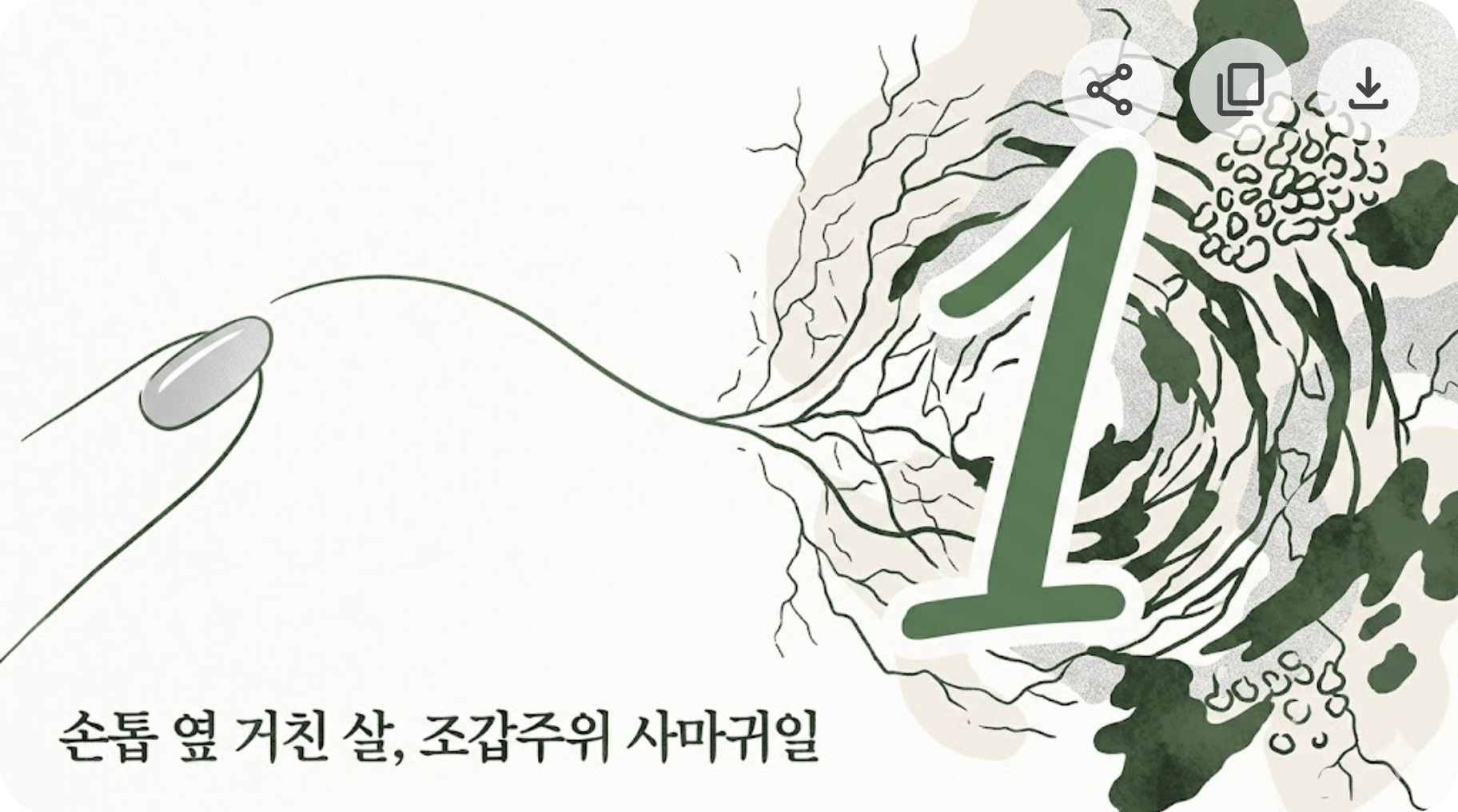
Tiny, transparent blisters erupt on the fingers and palms, accompanied by an unbearable itch that breaks out from within them.
“If I scratch and pop them because they're itchy, they ooze, and when they heal, my skin cracks and hurts. I'm afraid of water and detergents touching them, so I can't do anything without rubber gloves.”
Dyshidrosis is not just housewife's eczema. It's a problem that prevents you from freely using your 'hands,' the most important tool for interacting with the world, and fills every daily activity with hesitation and pain, diminishing your quality of life.
Causes and Symptoms
Small 'water sacs' trapped beneath the skin
The small blisters characteristic of dyshidrosis are tiny 'water sacs' formed by 'unnecessary moisture (serous fluid)' trapped within our skin that hasn't been discharged.
Our skin can be compared to a 'sponge'. A healthy sponge absorbs moisture well and can be squeezed dry when needed. However, skin affected by dyshidrosis is like a 'waterlogged sponge' that has lost its ability to regulate moisture.
Excessive moisture gets trapped between skin layers, creating pressure and irritating nerves (causing itchiness), eventually pushing up the skin surface in the form of small blisters.
If these blisters are popped, the skin barrier is damaged, making it more vulnerable to external irritants and increasing the risk of secondary infection.
Traditional Korean Medicine Perspective
My hands and feet, turned into 'swamplands'
In Traditional Korean Medicine, our body is viewed as a 'natural' entity. Dyshidrosis is diagnosed as a state where our body, specifically the 'ground' of our hands and feet, has transformed into a 'mushy and hot swampland'.
When the function of the digestive system (Spleen and Stomach), which governs the body's fluid metabolism, declines, undischarged 'dampness (濕)' circulates within the body. This dampness combines with 'heat (熱)' caused by stress or food, erupting in the form of 'blisters' and 'inflammation' in the extremities of our body, the hands and feet.
Therefore, TKM treatment does not simply dry out the skin blisters, but focuses on strengthening the body's 'water gate management system' (Spleen and Stomach) to fundamentally prevent dampness from forming, and cooling the 'heat of the swamp' (clearing heat and resolving dampness - 淸熱利濕) to restore the 'ground' of the hands and feet to a dry and healthy state.
Lifestyle Management
3 Lifestyle Rules to Break the Cycle of Irritation
It is essential to protect the weakened skin of your hands and feet from daily irritants and give it time to heal naturally.
Rule 1: Block Irritants (Barrier Protection)
Detergents, chemicals, and metals (such as nickel) are major culprits that exacerbate dyshidrosis. When washing dishes or cleaning, always wear cotton gloves first, then rubber gloves over them, to provide double protection for your skin.
Rule 2: Moisture Management (Moisture Control)
After contact with water, it is essential to thoroughly dry your hands. However, to prevent the skin from becoming too dry, consistently applying a non-irritating moisturizer to balance oil and moisture is key to restoring the skin barrier.
Rule 3: Stress Management (Stress Management)
Mental stress is the most potent exacerbating factor, promoting inflammatory responses and disrupting the immune system. Reduce bodily tension through adequate rest and sleep.
Prognosis and Optimal Treatment Window
Before losing the 'joy of using your hands'
Dyshidrosis is a chronic condition that repeatedly waxes and wanes. What lies at the end of neglecting this painful cycle of recurrence?
It is 'permanent damage' where the skin becomes hard and thick due to repeated inflammation and wounds, leading to the disappearance of fingerprints or deformation of nails.
Above all, it is a path towards gradually losing the 'joy of using your hands' to cook, write, play an instrument, and hold the hands of loved ones.
However, now, breaking this cycle of recurrence and correcting the fundamental imbalance in your body is the wisest choice to not only escape itchiness and blisters but also to protect your precious daily life and regain the joy of creating something with your own hands.