
Why Do Warts Recur: The Hidden War Between Viruses and Skin Tissue

Table of Contents
Hello everyone. Today, let's delve a bit deeper into warts. Warts are common, but they're not just simple skin lesions. Even if the surface is removed, they often reappear, and multiple treatments might not eliminate them completely. Many people ask, "Do these have deep roots?" In fact, that expression contains a rather precise pathological truth.
1. Pathology of Warts: Latent Infection in the Basal Layer
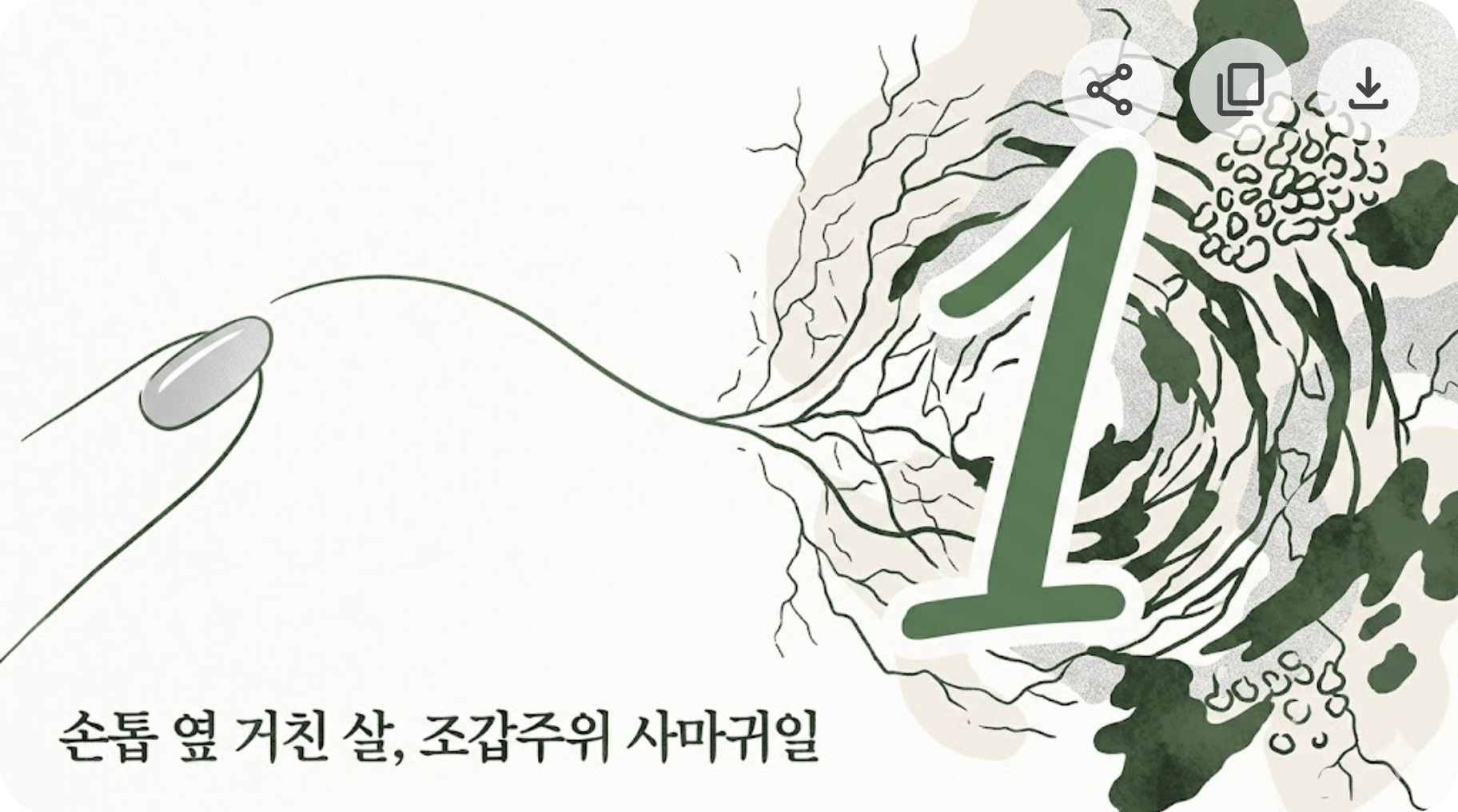
Warts are caused by Human Papillomavirus (HPV) infection, which infects the deepest epidermal layer of the skin, the basal layer. At this point, the virus disrupts the cell cycle regulation of keratinocytes and inhibits the function of tumor suppressor proteins like p53 and Rb, allowing infected cells to evade differentiation and apoptosis.
This process is not merely a genetic mutation but a result of virus-induced epigenetic reprogramming. In other words, while the genes themselves don't change, the cell's expression profile is readjusted by the virus.
As a result, the skin loses its normal keratin exfoliation cycle, exhibiting abnormal keratin proliferation and epidermal thickening, forming the wart shape we commonly see.
2. Why Do Warts Recur Repeatedly? — Immune Evasion and Treatment Failure
HPV does not invade the dermis; instead, it remains confined within the epidermis, where immune surveillance is relatively limited. Specifically, infected cells in the basal layer have reduced MHC class I expression, making them difficult for CD8+ T cells to recognize.
This means that if only the superficial lesion is removed during treatment, leaving latent infected cells in the basal layer, these infected keratinocytes will resurface, leading to recurrence. What clinicians commonly refer to as the "root of the wart" is precisely this viral reservoir within the basal layer.
3. Tissue Infiltration and Morphological Diversity of Warts
While some warts present as shallow lesions confined to the epidermis, lesions located deeper, especially deep plantar warts or warts on the palm, can histologically compress beyond the basal layer, reaching the spinous layer or near the papillary dermis.
Such lesions have clear borders, feel firm to the touch, and often do not disappear with superficial treatment alone without surgical removal, frequently recurring and even spreading to surrounding tissues. Furthermore, depending on the patient's skin physiology and immune response, some warts may become severely hyperkeratotic and hardened, while others may shed softly like scales. In immunocompromised patients, they can spread as confluent or mosaic warts.
4. What's the Real Core of Treatment?
True treatment isn't just about removing the lesion. The key is to make the immune system react to the infected cells in the basal layer. To achieve this, the following strategies are employed:
- Inducing local immune responses through lesion irritation.
- Stimulating TLR7 to increase cytokine secretion.
- Promoting epidermal regeneration by removing the stratum corneum.
These methods can all be considered treatment strategies designed to facilitate access to infected cells that are evading the immune system.
Warts are not merely 'lumps of keratin'. They represent a prolonged battle between the virus and the immune system, originating in the basal layer of the skin, and treatment is only meaningful if it precisely targets that core. Please remember that depending on the patient's constitution, immunity, and infection extent, a strategy involving immune reactivation beyond simple removal may be necessary.
Thank you.
#WartRecurrence #RecurrentWarts #IncheonWarts