
Endoscopy came back clean, so why do I still have stomach pain every day? | Incheon Damjeok Disease

Table of Contents
- Incheon Damjeok Disease
- The Meaning of a 'Hardened' Stomach
- Damjeok: The Toxin Barrier
- 3 Lifestyle Principles for a Hardened Stomach
- Principle 1: Diet Temperature and Type
- Principle 2: Reduce Digestive Burden
- Principle 3: Promote Abdominal Circulation
- Before ‘Indigestion’ Spreads to ‘Chronic Disease’
- #DamjeokDisease
Incheon Damjeok Disease
Tests clearly show no problems. Yet, my day begins and ends with a suffocating pressure on my solar plexus and gas-filled bloating.
“I always have indigestion and feel bloated. The area below my solar plexus feels hard, like a stone.”
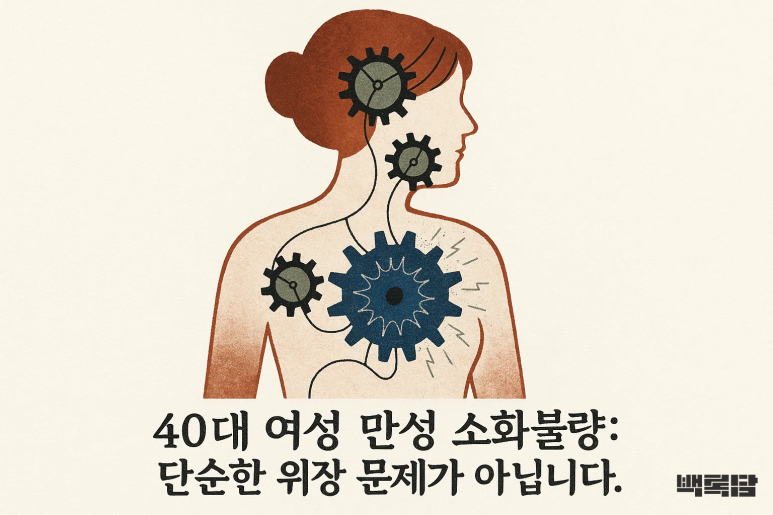
Indigestion of unknown cause, frequent burping and nausea, sometimes even headaches and dizziness. Because it's invisible, it's an even more frustrating and lonely battle. It could be an ‘invisible’ distress signal sent by your stomach – Damjeok disease.
The Meaning of a 'Hardened' Stomach
Our stomach is a powerful yet gentle 'pump' that breaks down and digests food every day. In its normal state, this pump actively moves food downwards.
But what if, due to poor eating habits or stress, undigested food waste accumulates layer by layer in the muscle layer outside the gastric mucosa, like cement-mixed mud, and hardens? The wall of the stomach, this pump, becomes rigid and can no longer move properly.
As the pumping action weakens, food remains in the stomach longer, leading to gas and bloating (abdominal distension). The hardened tissue itself creates a feeling of stony hardness (discomfort/tightness).
Damjeok: The Toxin Barrier
Traditional Korean Medicine has long explained invisible stomach problems through the concept of ‘Damjeok’ (痰積). ‘Damjeok’ is a type of ‘toxin barrier’ formed by metamorphosed undigested waste products accumulated on the outer wall of the stomach.
This barrier doesn't just hinder digestive motility. It obstructs the ‘pathways of Qi and Blood (氣血),’ which transport nutrients and energy throughout the body, becoming a fundamental cause of systemic symptoms such as chronic fatigue, headaches, dizziness, and shoulder stiffness.
Therefore, Traditional Korean Medicine treatment focuses on gently dissolving this ‘hardened wall of toxins’ and expelling it from the body. Beyond restoring digestive function, it aims to correct systemic circulation and restore overall health.
3 Lifestyle Principles for a Hardened Stomach
In daily life, reducing the burden on the stomach and promoting circulation is the most crucial first step towards recovery.
Principle 1: Diet Temperature and Type
Cold foods and drinks further tense a hardened stomach. Avoid cold foods, as well as flour-based and greasy foods that strain digestion, and focus on consuming warm foods.
Principle 2: Reduce Digestive Burden
Eating too quickly or overeating is like giving your stomach an excessive workload beyond its capacity. Chew your food thoroughly and adopt the habit of eating only appropriate portions. Give your stomach time to rest.
Principle 3: Promote Abdominal Circulation
Gently massaging around the solar plexus and belly button with warm hands, or applying a warm compress, is one of the best ways to relax hardened abdominal muscles and promote the circulation of Qi and Blood.
Before ‘Indigestion’ Spreads to ‘Chronic Disease’
Damjeok, which begins as simple indigestion, never remains just a stomach problem. Dismissing it as merely ‘constitutional’ or ‘nervous’ and neglecting it is akin to letting the ‘toxin barrier’ spread throughout your entire body.
At the end of that path, you'll find chronic fatigue, headaches and skin issues of unknown cause, and general lethargy.
However, in the early stages, recognizing the signals your digestive system sends and striving to restore stomach function will not only lead to a comfortable day but also pave the way to reclaiming a vibrant, healthy life. That choice now lies before you.