
If You Keep Feeling Nauseous and Like You're Going to Vomit | Incheon Nausea

Table of Contents
- 1. Recurrent Nausea and Vomiting: It Might Not Be a Stomach Issue
- 2. First Cause – Functional Gastrointestinal Disorder
- 3. Second Cause – Autonomic Nervous System Imbalance
- 4. Third Cause – Vomiting Related to Eating Disorders
- 5. Fourth Cause – Centrally Mediated Vomiting
- 6. How Should These Cases Be Treated?
Hello. This is Baengnokdam Korean Medicine Clinic.
Today, let's discuss situations like these:
“All my tests are fine, but… I keep feeling nauseous.”
“Every morning I feel queasy, and sometimes I feel like I’m really going to vomit.”
“It always happens when I’m stressed or have something important to do.”
My endoscopy results are normal. There’s no inflammation, and no specific illness has been found. So why does this sensation persist?
1. Recurrent Nausea and Vomiting: It Might Not Be a Stomach Issue
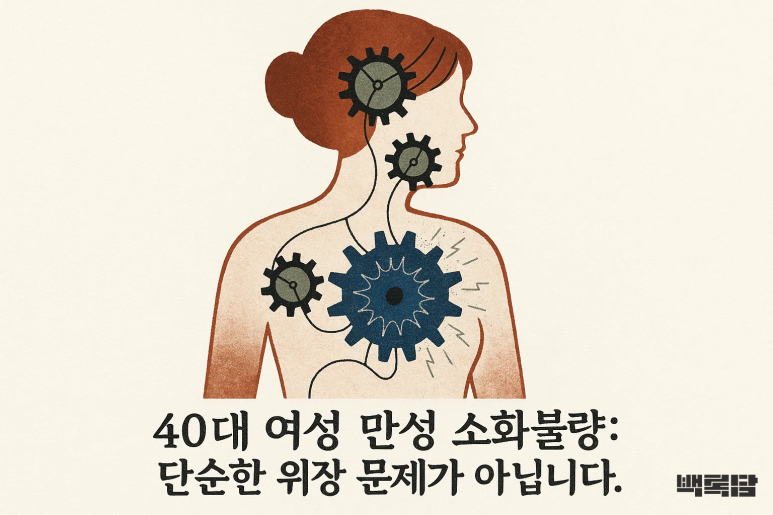
When nausea and vomiting occur periodically and repeatedly, rather than as an isolated incident, it may not simply be a symptom of a damaged stomach. In these situations, we need to approach the issue from a ‘functional’ or ‘mind-body connection’ perspective. In other words, while the stomach’s structure may be perfectly healthy, it could be a sign that it’s not communicating effectively with the brain.
2. First Cause – Functional Gastrointestinal Disorder
Functional gastrointestinal disorder, often referred to as FD (Functional Dyspepsia), presents with normal endoscopic findings, yet patients clearly experience symptoms such as heartburn, bloating, nausea, and a feeling of pressure. Notably, in cases involving delayed gastric emptying or heightened sensitivity to stomach acid, nausea can frequently occur even on an empty stomach.
“I feel fine while eating, but after I finish, I get a feeling of reflux.”
“After meals, my epigastric region often feels tight and uncomfortable.”
3. Second Cause – Autonomic Nervous System Imbalance
Many people experience nausea when under stress, or feel queasy every morning before an important day. This is not merely a psychological issue. In fact, an imbalance in the autonomic nervous system can cause gastric motility to halt or, conversely, lead to excessive contractions.
“I haven’t even eaten, yet I feel a reflux sensation.”
“When I’m stressed, my body reacts first.”
4. Third Cause – Vomiting Related to Eating Disorders
The next topic delves into a somewhat more sensitive area: vomiting symptoms associated with eating disorders. For instance, in bulimia nervosa, recurrent vomiting follows episodes of overeating. In ARFID (Avoidant/Restrictive Food Intake Disorder), the aversion to food textures or sensations can cause the act of eating itself to trigger a gag reflex or vomiting.
“I’m afraid to eat.”
“I want to eat, but after I do, I feel like gagging.”
5. Fourth Cause – Centrally Mediated Vomiting
Vomiting, in fact, originates not in the stomach but in the brain’s vomiting center. Symptoms such as nausea and the sensation of needing to vomit can also manifest with migraines, orthostatic hypotension, or reduced thyroid function.
“I feel queasy in my stomach before my head starts to ache.”
“I feel like I’m going to vomit when I stand up after sitting.”
6. How Should These Cases Be Treated?
Simple antacids or digestive aids alone are insufficient. The following four points are key:
- Autonomic Nervous System Stabilization
- Trial Administration of Functional Gastrointestinal Medications
- Evaluation of Psychological Pathways
- Traditional Korean Medicine Treatment
Crucially, it is important to maintain a symptom diary.
“When do you feel nauseous?”
“What did you eat when it happened?”
“What was your emotional state?”
Recording just these three points can help identify the trigger pattern more than 70% of the time.
Recurrent nausea and vomiting are not merely signs of a sensitive stomach. They can indicate that the intricate pathways between the brain, stomach, and emotions have become entangled. Once these patterns repeat, the nervous system tends to learn and reinforce them. Therefore, do not give up; take the first step now to understand and manage these sensations.
Thank you.
#Nausea #SuddenNausea