Damjeok-byeong: Internal medicine or Korean medicine clinic? Which hospital should I go to?

I hear these words very often in the consultation room.
Many people say that their stomach feels bloated and stuffy even though they haven't eaten anything special.
Since these symptoms often show no particular abnormalities in hospital tests, they express even more frustration.
Are you, the reader, also suffering from chronic indigestion or abdominal discomfort?
You may feel lost regarding which medical institution to visit or whether this pain can actually be resolved
.Today, I would like to talk about 'Damjeok-byeong,' which is closely related to what is commonly called functional dyspepsia in gastroenterology
.|
"When I wake up in the morning, my stomach always feels heavy, and I feel like nothing I eat digests well. The hospital says there is nothing wrong... I'm truly exhausted. Every day is painful due to chronic indigestion and gastrointestinal disease." |
What exactly is Damjeok-byeong?
Damjeok-byeong(痰積病) might sound like an unfamiliar name
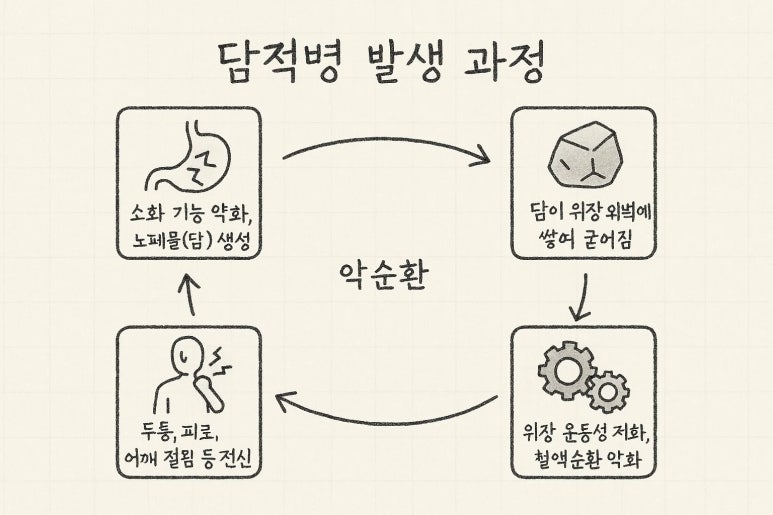
.In Korean medicine, it is believed that as the body's digestive function weakens, food is not digested properly, creating sticky waste products called 'Dam(痰)'
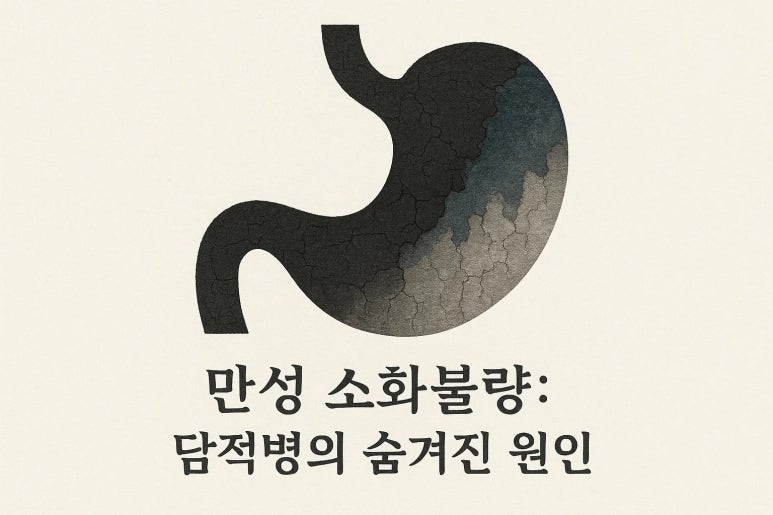
.The phenomenon where this Dam accumulates and hardens on the gastrointestinal wall, becoming hard like a stone, is called 'Damjeok'
.It begins as a simple gastrointestinal disease or chronic indigestion, but as Damjeok accumulates and the decline in gastrointestinal function worsens, it causes various discomforts
.Decreased gastrointestinal motility and reduced absorption capacity, as well as abnormal gastric acid secretion, can occur
.This should be understood not simply as a problem of the digestive organs, but as a complex syndrome that affects the entire body
.|
The Core Principle of Damjeok Diseaseis 'Stiffening of the Stomach Wall'. Undigested waste matter (dam) does not stay only within the stomach mucosal lining, but seeps into the stomach muscular layerand surrounding tissues, hardening stiffly .This can be likened to moisture accumulating in old walls, causing wallpaper to bubble up and the walls themselves to become damp. This hardening interferes with the normal peristaltic movement of the stomach, and blood circulation and nerve transmissionare also adversely affected, causing various systemic symptoms. |
It's not just stomach discomfort: Hidden Symptoms of Damjeok Disease
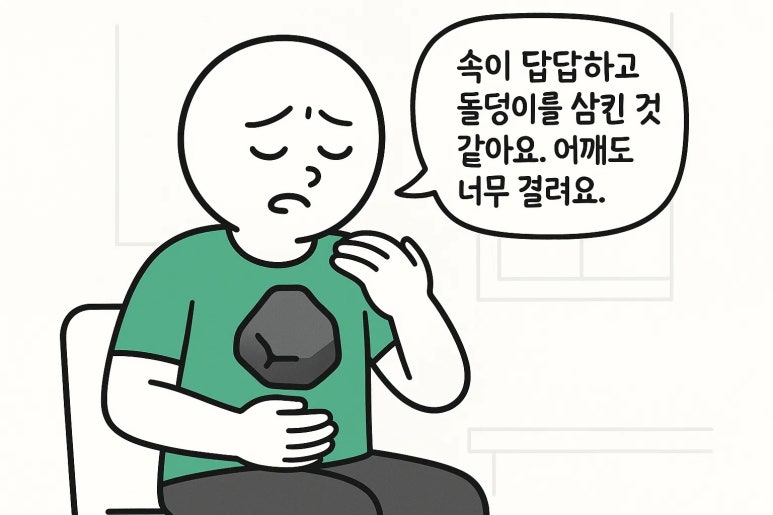
When people talk about Damjeok Disease, they often just think 'it feels bloated and heavy in my stomach'.
However, among the patients I see in clinical practice, many suffer from unexpected systemic symptoms beyond stomach issues.
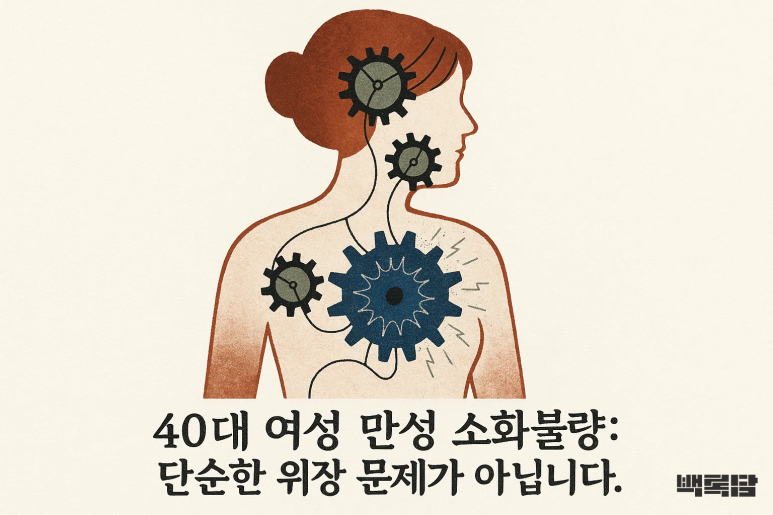
Damjeok does not stay only in the gastrointestinal tract; it circulates throughout the body via blood and lymph, and can also cause headaches, chest tightness, neck or shoulder stiffness, chronic fatigue, and even neurological symptoms such as depression or anxiety.
In particular, when examining the upper abdomen of patients with severe chronic indigestion, it is common to feel hardened indurated areas.
|
Ji-hyun (pseudonym), an office worker in her 30s, visited the clinic always saying, 'it feels like I swallowed a stone'. She complained of a constant feeling of stuffiness in her chest and abdominal bloating, feeling full even after eating only a little. However, she mentioned that from a few months ago, symptoms of lower back pain and stiff shouldershad become particularly severe. Internal medicine tests showed no specific abnormal findings, and even after receiving physical therapy thinking it was a musculoskeletal problem, the relief was only temporary. Upon detailed consultation, Ji-hyun's lower back painand shoulder stiffnessshowed a pattern of worsening along with chronic indigestion, namely Damjeok symptoms. I began herbal medicine treatment to restore Ji-hyun's gastrointestinal functionand remove Damjeok, and a few weeks later, Ji-hyun smiled brightly, saying, 'Now that my stomach feels comfortable, the back pain has also decreased significantly.' |
Internal Medicine vs. Korean Medicine Clinic: Damjeok-byeong, where and how should it be treated?
Chronic gastrointestinal discomfort is the most common concern for adult patients in their 30s to 50s who suffer from this.
Even when a gastroscopy at an internal medicine clinic shows no particular abnormalities, the symptoms persist, making it difficult to know where to go.
Internal medicine clinics primarily provide treatments to alleviate digestive symptoms similar to Damjeok symptoms using acid suppressants or gastrointestinal motility regulators.
Of course, these are essential treatments when inflammation or ulcers are present.
However, Damjeok-byeong is a condition that requires a deeper look into the structural and functional problem of 'hardening' of the gastrointestinal tract.
Korean medicine clinics focus on resolving Damjeok and fundamentally restoring gastrointestinal function.
By closely analyzing each patient's constitution and symptom pattern, they prescribe customized herbal medicine to resolve Damjeok and combine this with acupuncture or moxibustion treatment to improve the circulation of Qi and blood in the gastrointestinal tract and relax hardened tissues.
This is closer to a process of recovering self-healing power by changing the body's environment itself, rather than simply suppressing symptoms.
|
Damjeok-byeongis not a single disease name directly diagnosed in modern medicine. However, the symptom patterns of patients with functional dyspepsia, reflux esophagitis and other chronic gastrointestinal diseases of unknown cause overlap significantly with the Korean medicine concept of 'Damjeok'. When I meet such patients, I do not look only at the test results, but listen to the patient's voice to understand the context of the Damjeok symptoms and establish a treatment plan. Ultimately, regardless of which Damjeok clinic recommendation you receive, it is important to meet a medical professional who has a treatment philosophy that suits you. |
The Path to Recovery Suited for Your Body: How to Overcome Damjeok-byeong?
Damjeok-byeong is not a condition that develops overnight.
It is a chronic problem that occurs as lifestyle habits, eating habits, and stress accumulate over a long period of time.
Therefore, Damjeok treatment also requires steady effort and patience.
I do not simply tell my patients to take herbal medicine.
True recovery of health can be expected when accompanied by overall lifestyle changes, such as improving eating habits, appropriate exercise, and stress management.
It is important to choose the Damjeok treatment method that is most suitable for you.
When you are worried about which Damjeok specialist to seek, it is wise to look for medical staff who can deeply understand and communicate regarding your symptoms and body condition, rather than simply relying on fame.
|
Damjeok-byeong is not a disease that is 'completely' cured in a short period of time, and relying on folk remedies or unverified treatments can be dangerous. Since the body's response differs for each individual, it is important to consult sufficiently with professional medical staff and establish a systematic treatment plan. Care must be taken to avoid experiencing greater health problems due to hasty judgments or incorrect information. |
Damjeok-byeong is an important signal sent by our body.
I sincerely hope that everyone listens to the messages sent by the body and regains a healthy life through correct treatment and steady management.
Even if it is not with me, I support you in finding medical staff who carefully examine the entire body and walking the path of recovery together.