
When Abdominal Pain and Discomfort Rise | Incheon Functional Dyspepsia

Table of Contents
When you just stand in front of food, why do you shrink?
You're clearly hungry, yet holding the spoon feels scary. Even after eating just a little, your chest feels completely blocked, and for hours it seems like the food just stays right there, heavy and suffocating.
"Eating isn't fun anymore. After eating, I always feel bloated and tired, so there are times when I'd rather go hungry to feel better."
Functional Dyspepsia
It's not simply a matter of 'not digesting well.' The most fundamental act of obtaining energy and experiencing joy in life through food has become the start of suffering, draining the vitality from your daily life.
Causes and Symptoms
An invisible malfunction: 'Stomach Motor Function'
The endoscopic findings are clear. There's no inflammation or wounds in the stomach. But my stomach simply doesn't work.
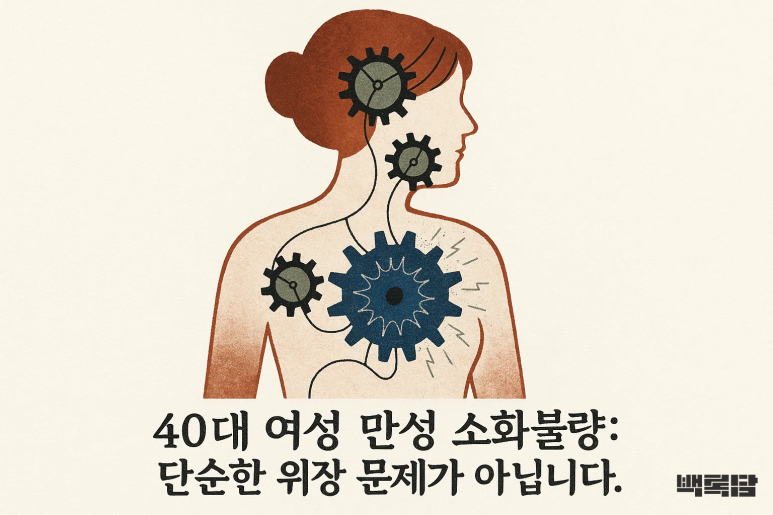
The core of functional dyspepsia lies not in visible 'structural' problems, but in invisible 'functional' decline. Our stomach is like a powerful 'engine' that moves on its own, breaking food into smaller pieces and pushing it downward. However, when errors occur in the nervous system that regulates the stomach due to stress or poor eating habits, the engine's output drops significantly.
Traditional Korean Medicine Perspective
The 'fuel' for the engine is insufficient, and the 'heat' of the engine is excessive
Traditional Korean Medicine views the causes of functional dyspepsia through two key imbalances.
First, it's the state of having insufficient fundamental 'fuel (giun 氣運)' to run the 'engine' of the stomach (biwi-giheo 脾胃氣虛). The whole body feels listless and fatigued, lacking even the strength to digest. You tire out from just a little eating, and want to lie down right after meals.
Second, it's the state where unnecessary 'heat (hwa 火)' has been generated in the 'engine' due to stress (wiryul 胃熱). This heat dries up the stomach's digestive fluids (moisture), disrupting normal motor rhythm. Symptoms such as sour stomach, feeling of fullness, and dry mouth with bad odor mainly appear.
Therefore, traditional Korean medicine treatment uses an individualized, customized approach of 'supplementing insufficient fuel (bogi 補氣)' and 'cooling unnecessary heat (cheongyeol 淸熱)' to help the stomach engine operate again at optimal efficiency on its own.
Lifestyle Management
3 Ways to Reheat Your Stomach Engine
Small daily habits can gently restart the stalled stomach engine.
Method 1: Small Amounts, Frequently (Divide & Conquer)
Processing large amounts of food at once puts overload on a weakened engine. Instead of reducing meal portions, add healthy snacks in the morning and afternoon to distribute the workload so that the digestive system can work without strain.
Method 2: The Rhythm of Walking (Gentle Rhythm)
Walking lightly for about 15-20 minutes after meals is the best natural digestive aid for restoring the stomach's motor rhythm. Walking gently stimulates the stomach's peristaltic movement and also helps clear the mind.
Method 3: Emotional Venting (Emotional Vent)
Stress is the stomach's greatest enemy. Find your own way to relieve stress and create an 'outlet' for emotions. Anything works—short meditation, enjoying music, chatting with close friends, etc.
Prognosis and Golden Time
Will you give up the 'joy of eating'? Functional dyspepsia is easy to ignore as 'just nervous' or 'constitutional.' But at the end of that road waits complete loss of joy in food and chronic listlessness and decreased stamina from nutritional imbalance.
You may give up one of life's greatest pleasures—the 'joy of eating'—and end up confining yourself within an ever-shrinking life radius. However, the path of recognizing the signals your body sends and making efforts to restore stomach function goes beyond simply solving indigestion; it will become the path to regain the joy of eating and recover an energetic, vibrant life through the energy gained from it.
That opportunity for choice is now before you.
#FunctionalDyspepsia #Indigestion