Burning tongue tip every morning? Here's what to suspect.

|
"When I wake up, it feels like bitter liquid is coming up onto my tongue. My tongue also has a thick yellow coating." |
|
CASE STUDY |
|
This is according to Mr./Ms. B, an office worker in their 30s. The bitter taste occurred 4-5 times a week, especially severe right after waking up between 6-8 AM. The day after a high-fat late-night snack was the worst, and while taking gastritis medication (PPI) for two weeks temporarily alleviated symptoms during the day, the unpleasant taste returned in the afternoon. Their water intake was relatively low, about 800-1000mL per day. |
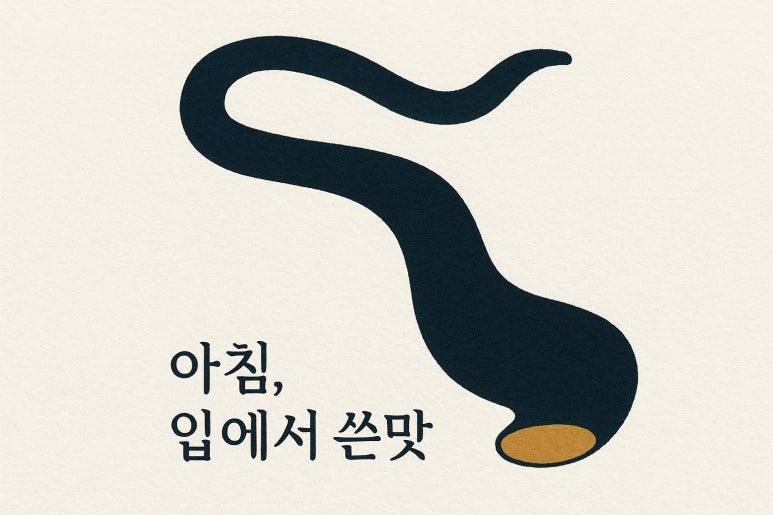
This phenomenon is like a river flowing upstream all night, leaving a bitter puddle at the port in the early morning. The river is bile, and the port is the tongue. Late-night eating and stress disrupt the balance of the autonomic nervous system, reducing gastrointestinal motility, and if the pylorus relaxes, bile from the duodenum seeps into the stomach → esophagus → pharynx (non-acid reflux). Insufficient saliva prevents the bitter components from being washed away, causing the taste to linger.
The reason it's worse in the morning is clear. Bile becomes concentrated due to fasting overnight, and if there was mouth breathing or teeth grinding during sleep, the mouth would be even drier. Until a glass of water is drunk immediately after waking up, the washing and buffering functions are diminished. Therefore, the bitter taste in the morning is likely a complex signal involving the autonomic nervous system, bile reflux, reduced saliva, and microbial changes, rather than simply "bad liver."
|
📖 Terminology: Bile Reflux (DGER) A phenomenon where alkaline bile, unlike stomach acid, flows back into the stomach and esophagus. May respond poorly to PPIs. Late-night eating, high-fat foods, and body position can influence it. |
|
📖 Terminology: Dry Mouth (Xerostomia) When saliva production decreases, pH buffering, washing, and antibacterial functions are diminished, leading to persistent bitter/metallic taste and tongue coating. Associated with medications, sleep habits, and fluid intake. |
|
Caution: If accompanied by severe right upper quadrant pain + fever + jaundice + pale stools, immediate medical evaluation is required. If weight loss, nocturnal cough, or persistent hoarseness occurs, evaluation for upper gastrointestinal/laryngeal reflux is recommended. |
Finish meals 3 hours before bedtime, drink 200mL of water immediately after waking up + tongue cleaning, sleep on your left side, and drink around 1.5L of water daily. If the response to PPIs is weak, consult a specialist about gastrointestinal motility (itopride/mosapride) and bile regulation strategies.
|
✅ Key Takeaways
|
|
Questions you might need to ask at your next appointment: “What tests/lifestyle records would be necessary to assess if the bitter taste is a combination of ‘non-acid (bile) reflux + reduced saliva’?” |