50s Menopausal Insomnia: Night Sweats Every Night | Incheon Menopause

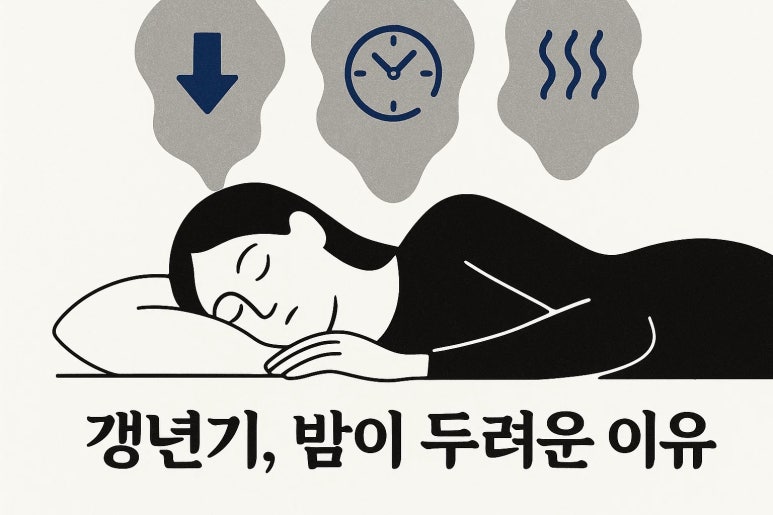
Night Sweats Every Night, Waking Up at 3 AM… Menopause: Three Thieves Stealing Your Sleep
|
"When I was young, I'd fall asleep the moment my head hit the pillow, but now that I'm in my 50s, falling asleep itself is a struggle. Even if I manage to drift off, my eyes are wide awake by 3 AM." |
A time when nights become dreaded, `menopausal insomnia` brings more than just simple sleep deprivation. The repeated waking and sleeping, occurring involuntarily, leads to daytime fatigue and lethargy, shaking the quality of life to its core.
What is the real reason for these sleepless nights?
The culprit is not a lack of willpower on your part, but three significant changes happening within your body.
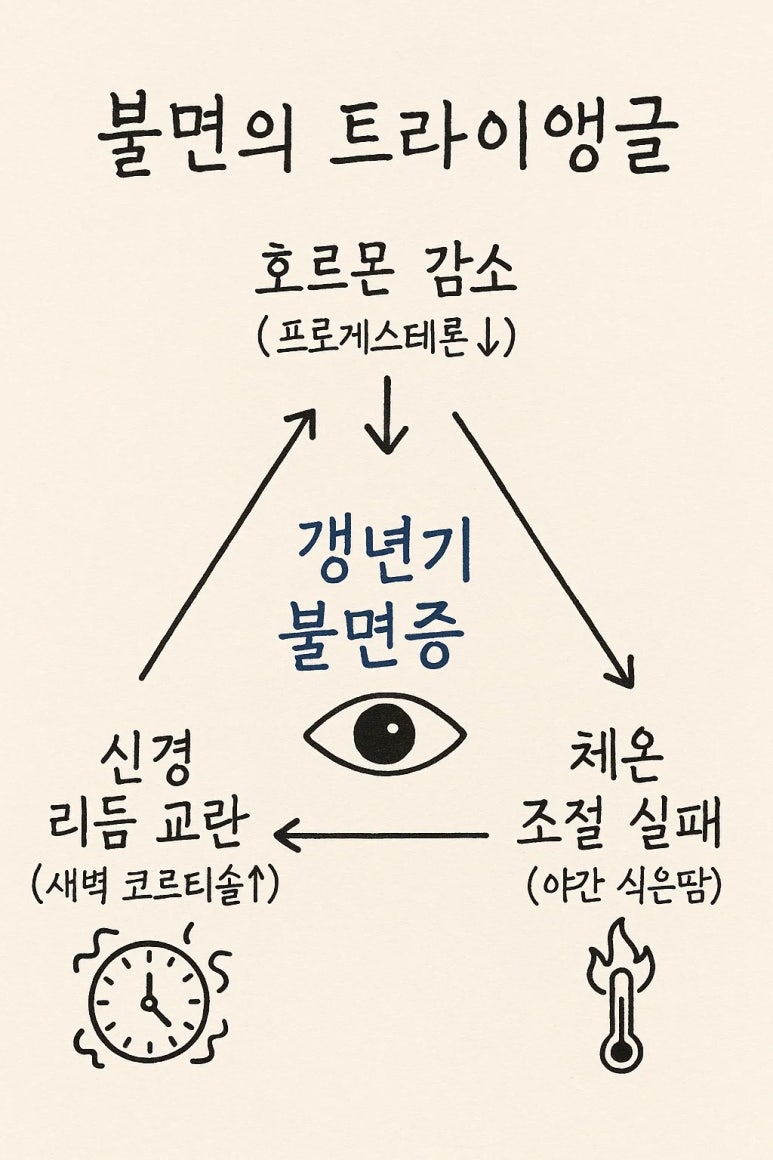
The first thief is the 'absence of sleep-inducing hormones'.
The female hormone progesterone acts as a natural sleep aid in the brain. It activates gamma-aminobutyric acid (GABA), a neurotransmitter that calms brain excitation, reducing anxiety and helping one fall asleep easily. However, as menopause approaches, the secretion of progesterone decreases, and our body effectively loses one of its most powerful tools for self-soothing.
The second thief is the 'disruption of the sleep-wake rhythm'.
|
"Exactly at 3 AM, my eyes open like clockwork, and I can't fall back asleep until morning." |
This is a strong signal that the balance between the sleep hormone 'melatonin' and the stress hormone 'cortisol' has been disrupted. A healthy body secretes melatonin at night to induce sleep, and cortisol at dawn to awaken the body.
However, during menopause, due to the influence of `estrogen deficiency symptoms`, this delicate internal clock breaks down: melatonin secretion decreases, and cortisol begins to be secreted too early in the morning. It's as if an emergency wake-up switch is forcibly flipped in the middle of the night.
The third thief is the 'malfunction of the body's thermoregulation system'.
|
[CASE] Ms. C, 51, frequently woke up soaked in sweat as her entire body suddenly became hot every night. This is precisely `night sweats`, or menopausal night sweats. Estrogen plays a role in helping the brain's thermoregulation center (hypothalamus) function stably. When estrogen decreases, this regulatory center reacts extremely sensitively even to minor temperature changes, suddenly dilating blood vessels to release heat. When you suddenly feel hot and sweat in the middle of the night, maintaining deep sleep becomes impossible. |
Onset of menopause → Decreased estrogen/progesterone → ①Reduced sleep induction ability + ②Early morning awakening (cortisol) + ③Night sweats (body temperature) → Overall decrease in sleep quality.
|
[Note: Traditional Korean Medicine Perspective] In Traditional Korean Medicine (TKM), menopausal insomnia is explained as 'Heart Fire blazing upwards (心火上炎)' due to 'Kidney Yin deficiency (腎水不足)'. As one ages, the fundamental fluids and vital essence (Kidney Yin/Kidney Water, 腎水) of the body deplete, and the uncontrolled Heart Fire (心火) blazes upwards, leading to mental restlessness and disturbed sleep. This offers an insight to consider the body's fundamental balance before expecting `melatonin benefits`. |
|
[Ways to Protect Your Sleep] So, how can we protect our sleep from these three thieves? Sleep aids are merely a temporary solution; the fundamental solution lies in integrally understanding and managing these three changes. The first step to `getting deep sleep` begins with efforts to restore your body's rhythm, such as getting enough sunlight during the day to aid melatonin production, and avoiding excessive exercise or food intake in the evening to stabilize cortisol. |
|
[Check for Other Possibilities] However, if severe snoring or choking accompanies your sleep issues, it could be sleep apnea, and professional medical consultation is essential. |