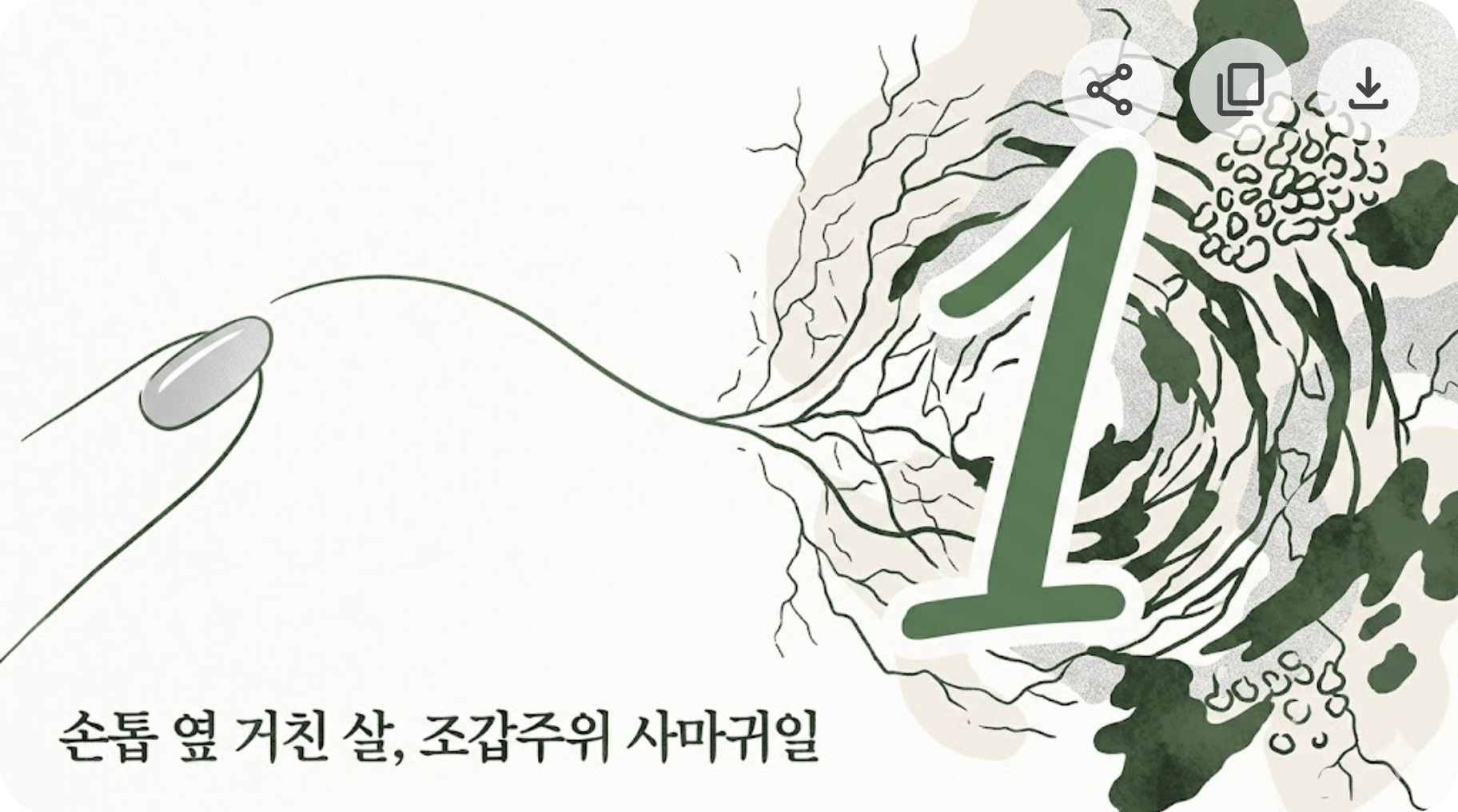

Physiology of Summer Cold Urticaria

Table of Contents
- 1. It's over 30 degrees, so why does my body react as if it touched ice?
- 2. What is cold urticaria – It is not simply that the skin is sensitive
- 3. Why cold stimuli occur even in summer – Skin that reacts to 'difference,' not absolute temperature
- 4. Perspective of the autonomic nerve and vascular loop – A structure where the body heat regulation system clashes
- 5. Learning and fixation of the skin sensory loop – Once experienced, the body remembers that reaction
- 6. Connection with air conditioning syndrome – A feeling that not only urticaria but the whole body is collapsing
- 8. Your body currently remembers coldness as a danger
1. It's over 30 degrees, so why does my body react as if it touched ice?
In the middle of a summer day, when it is 35 degrees outside, as soon as I enter an indoor space with the air conditioner on, my arms start to sting, the back of my neck feels a chill, and a reaction of red swelling on the skin begins.
Some people feel itchy all over after showering with cold water, or their lips sting after drinking just one glass of a cold beverage.
At first, you might think it is simple sensitivity. However, if this reaction repeats, it may be a signal that it is not simple sensitivity but that 'the reaction loop of my body has become abnormal.'
Today, I want to talk about this. About the unfamiliar and complex summer-type cold urticaria, which reacts hypersensitively to cold stimuli even in midsummer.
2. What is cold urticaria – It is not simply that the skin is sensitive
Cold urticaria is a symptom where the skin swells red, itches, stings, and sometimes causes shortness of breath in the area where a cold stimulus touched.
Usually, it occurs more often in winter and appears when touching cold wind, cold water, or snow. However, if it appears during the summer, it may mean that it is not a skin problem but that the way my body interprets stimuli has changed.
The skin has sensory nerves, and those nerves react even to small temperature changes. If that stimulus is strong or repeated, immune cells called mast cells react and secrete histamine, and that is the beginning of urticaria.3. Why cold stimuli occur even in summer – Skin that reacts to 'difference,' not absolute temperature
In summer, our body temperature is basically in a raised state. At this time, cold stimuli from cold water, air conditioner wind, or the cooling effect of wet sweat drying are perceived as relatively much stronger stimuli.
For example, cold water at 15 degrees touching skin at 36.5 degrees is a stimulus with a difference of more than 20 degrees,and from the skin's perspective, this becomes a stimulus similar to ice water in winter.
Therefore, even in midsummer, the skin feels that it has been 'exposed to a cold environment,' and the sensory nerves send a warning signal. When that signal stimulates mast cells, it soon leads to urticaria, redness, and itching.
4. Perspective of the autonomic nerve and vascular loop – A structure where the body heat regulation system clashes
In summer, our body expands blood vessels to release heat outward. However, if you suddenly face air conditioner wind or enter a cooled space, the skin blood vessels contract rapidly, and in that process, the sensory nerves overreact.
This is a signal that the autonomic nervous system has not properly adapted to temperature changes. In other words, it means the body heat regulation loop itself is shaking. Especially for people with overwork, lack of sleep, or severe stress, the responsiveness of these autonomic nerves is lower, so the reaction becomes larger even to small temperature changes.
5. Learning and fixation of the skin sensory loop – Once experienced, the body remembers that reaction
The problem is that if such stimuli are repeated, the brain and nervous system learn that reaction.
Urticaria that initially reacted only during cold showers gradually begins to react just by entering a cooled indoor space, or even just when sweat cools down.This can be seen as a state where the symptom called 'urticaria' has become fixed like a reflex loop. And this state of fixation is difficult to recover with simple medication.6. Connection with air conditioning syndrome – A feeling that not only urticaria but the whole body is collapsing
People who react to cold stimuli in summer often say these things in addition to urticaria:
“I feel chilly.”
“My head feels foggy and I'm tired.”
“I have diarrhea, or I can't sleep well.”
These are expressions that overlap exactly with air conditioning syndrome symptoms. In fact, summer cold urticaria and air conditioning syndrome may be the same autonomic nerve disorder with different names. One appears on the skin, and the other affects the digestive system, body temperature, or emotions.
7. Recovery begins with the adjustment of the loop – Adjusting the autonomic nerve and sensory system
must be retrained.
Treatment does not end simply with suppressing the itching. The key is readjusting the loop.
You must restore the quality of sleep, lower sympathetic nerve hyperactivity through abdominal breathing, and perform sensory desensitization training by gradually exposing yourself to cold stimuli.
In terms of Korean medicine, treatment is conducted by differentiating whether wind-cold has invaded the body surface, whether the sensory loop is disturbed due to disharmony between the stomach and qi, or whether the body's own temperature regulation ability has decreased due to kidney qi deficiency.
8. Your body currently remembers coldness as a danger
You may have felt that your body reacting to the cold in the middle of summer was strange. However, this is not because your body is sensitive, but evidence that it is remembering and reacting to stimuli experienced previously.
Rather than simply saying "let's endure it" or "let's apply medicine," retracing your body's regulation system and redesigning that loop is the starting point for true recovery.
#SummerColdUrticaria #ColdUrticaria #IncheonColdUrticaria