
Menopause Symptoms, Treatment at a Korean Medicine Clinic

Table of Contents
- Table of Contents
- 1. Menopausal Syndrome: Threatening Women's Quality of Life
- 2. Disharmony of 氣血陰陽: Key Diagnostic Points in Traditional Korean Medicine
- 3. Harmonizing 氣血陰陽: Customized Prescriptions for Menopausal Symptoms
- 4. Effective Acupuncture Therapy for Improving Menopausal Symptoms
- 5. Managing Physical and Mental Condition is Key
- 6. A Hopeful Voyage Towards a Second Chapter in Life
Hello, I am Choi Yeon-seung, the Head Director of Baengnokdam Korean Medicine Clinic.
Today, I would like to discuss menopausal symptoms that trouble many middle-aged women.
Table of Contents
- Menopausal Syndrome: Threatening Women's Quality of Life
- Disharmony of 氣血陰陽: Key Diagnostic Points in Traditional Korean Medicine
- Harmonizing 氣血陰陽: Customized Prescriptions for Menopausal Symptoms
- Effective Acupuncture Therapy for Improving Menopausal Symptoms
- Managing Physical and Mental Condition is Key
- A Hopeful Voyage Towards a Second Chapter in Life
1. Menopausal Syndrome: Threatening Women's Quality of Life
"Every night, I wake up drenched in sweat. During the day, I experience inexplicable hot flashes and heart palpitations. My skin feels dry, and my wrinkles seem to deepen, making me feel depressed. My relationship with my husband isn't what it used to be either."
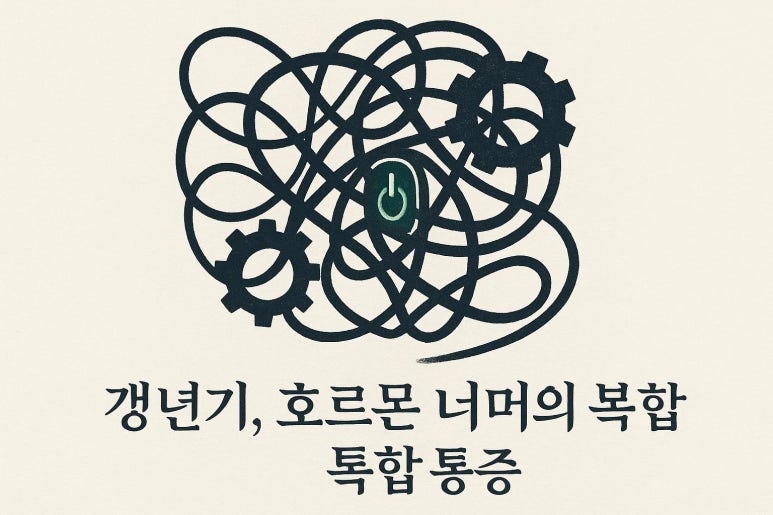
Menopause is a natural change that occurs in a woman's life. However, a decline in ovarian function leads to reduced estrogen secretion, disrupting physical and mental balance. This results in various menopausal symptoms, often lowering the quality of life.
2. Disharmony of 氣血陰陽: Key Diagnostic Points in Traditional Korean Medicine
In Traditional Korean Medicine, menopause is defined as a period when the Yin and Yang of the Kidney (in TKM) decline. The Kidney (in TKM) is considered a fundamental Zang-fu organ, governing reproductive function and aging.
3. Harmonizing 氣血陰陽: Customized Prescriptions for Menopausal Symptoms
The fundamental approach of Korean Medicine treatment is to nourish the Kidney (in TKM), manage Empty Heat (虛火), and restore the balance of Yin and Yang. Additionally, treatment methods that promote the smooth flow of Qi and Blood and harmonize the functions of the Zang-fu organs should be combined.
4. Effective Acupuncture Therapy for Improving Menopausal Symptoms
Acupuncture treatment greatly helps improve various menopausal symptoms by promoting the smooth circulation of Qi and Blood. Stimulating acupoints such as Neiguan (內關), Gongsun (公孫), and Zusanli (足三里) can regulate the functions of the Zang-fu organs.
5. Managing Physical and Mental Condition is Key
Alongside Korean Medicine treatment, lifestyle improvements must also be implemented. Above all, regular exercise and a balanced diet are fundamental.
6. A Hopeful Voyage Towards a Second Chapter in Life
"By consistently receiving Korean Medicine treatment, my menopausal symptoms have significantly improved. The hot flashes and sweating have decreased, and I've been able to sleep soundly. Most importantly, I've learned to love myself with a positive mindset. Now, I feel like I can dream new dreams."
Menopause is merely a transitional period of physical and mental changes, not an endpoint in life. Rather, it can be a meaningful turning point to reflect on the past and prepare for the life ahead.