
Reasons You Can't Digest, What the Phrase "I Can't Digest" Tells You | Incheon Indigestion

Table of Contents
- What "I can't digest" really tells us
- Feeling apprehensive even before eating
- Feeling stuffy right after eating
- Feeling full yet empty, with no room to spare
- Filled to the brim and not moving
- Constant burping
- When you don't want to eat but have to
- Some days when digestion just doesn't work well
- They say the tests show nothing abnormal
- "I can't digest" - this phrase itself is a collection of sensations
- Clinic information
Hello, this is Dr. Choi Yeon-seung at Baekrokdam Korean Medicine Clinic.
What "I can't digest" really tells us
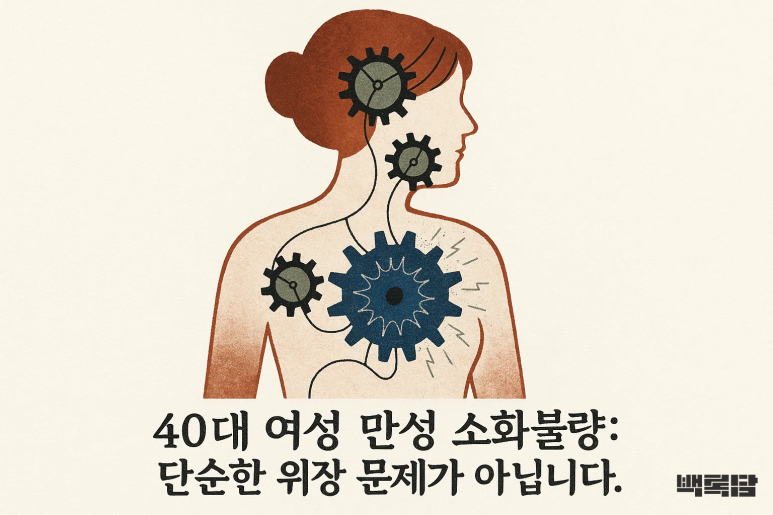
"I can't digest." Many patients say this during consultations, but this phrase actually contains many different sensations mixed together.
Feeling bloated, feeling heavy, chest feeling blocked, feeling full, constant burping, gas buildup, nausea, bitterness, food not going down, something pushing up from below...
They sound like the same thing, but when you actually listen, everyone's starting point is different, and the way they express it is slightly different.
Feeling apprehensive even before eating
Sometimes the stomach reacts before even taking a bite.
"After just one or two bites, it feels like something's going to get stuck." "I feel like I'll get stuffy right after eating." "I just feel overwhelmed even looking at food."
For those who say this, it's often not that there's a problem with the stomach itself, but rather that the body isn't ready to accept that food.
Feeling stuffy right after eating
Some people say the area around their breastbone suddenly feels stuffy shortly after eating.
"It feels like something's stuck around my chest." "The food I ate isn't going down and just stays there." "It's not my belly that's uncomfortable, it's the upper chest that's worse."
Feeling full yet empty, with no room to spare
Sometimes the belly is hungry, but when you try to eat something, your stomach feels heavy.
"My belly feels empty but food won't go in." "My stomach feels completely full in a hollow way. It feels like it would be even more uncomfortable if something went in." "It feels completely empty yet feels completely full."
Filled to the brim and not moving
It feels full, but the problem is that it doesn't spread or dissipate.
"Something feels like it's stuck right at the top." "It's not digesting, it just feels like it's stopped right there." "It won't move. It's completely stuck."
Constant burping
"I keep burping. But then it comes out again without me realizing, and even when it does come out, I don't feel better."
We hear this kind of thing often. The truth is, everyone has probably experienced it at some point.
When you don't want to eat but have to
Sometimes you want to eat, but when you see the dining table, your hand doesn't go toward the food.
"My belly is hungry but I have no appetite." "I do eat, but my stomach gets even more uncomfortable." "I forced myself to eat and it made me feel even heavier."
Some days when digestion just doesn't work well
There are days when you feel bloated and vaguely uncomfortable even without eating anything particularly irritating.
They say the tests show nothing abnormal
They had a gastroscopy at the hospital, did blood tests, the doctor said everything was fine, but there are still days when the body doesn't feel fine.
"I can't digest" - this phrase itself is a collection of sensations
"I can't digest." This phrase is so common that sometimes it sounds too light or trivial.
But if you look a little closer, there really are so many different sensations layered within it.
Clinic information
- Clinic hours -
Mon-Fri 10:00 AM - 7:00 PM
Lunch break 1:00 PM - 2:00 PM
※ We do not provide individual consultations through the blog.
Please check Naver Place or our official website for reservation and clinic inquiries.
Baekrokdam Korean Medicine Clinic Incheon Yeonsu-gu Convention Central-ro 81, Songdo Dream City 3F