
Loss of appetite in the elderly, it's not simply aging

Table of Contents
- Appetite is a System – From the Gastrointestinal Tract to the Brain and Motivation
- No Appetite vs. No Thought of Food – Where is the Break?
- Perspective of Dongui Bogam – “Appetite is an Indicator of Vital Energy”
- What Types of Loss of Appetite Exist in the Elderly?
- Restoration to Action – To Make Them Eat
- Appetite is the language of vitality
“I have no appetite” — the weight of a single phrase
Hello. This is Baekrokdam Korean Medicine Clinic.
Have you ever noticed an elderly family member frequently skipping meals or eating very little even when they do?
“I have no appetite,” “I’m not hungry,” “It’s just a hassle”…
These words are heard often, but they should never be taken lightly.
Loss of appetite in the elderly is not a simple phenomenon of aging. In reality, it can be a strong warning that the entire physiological, neurological, and emotional signaling system is breaking down.
Today, we will examine the pathways through which this symptom of loss of appetite occurs in our body and identify where the connection has been severed.
Appetite is a System – From the Gastrointestinal Tract to the Brain and Motivation
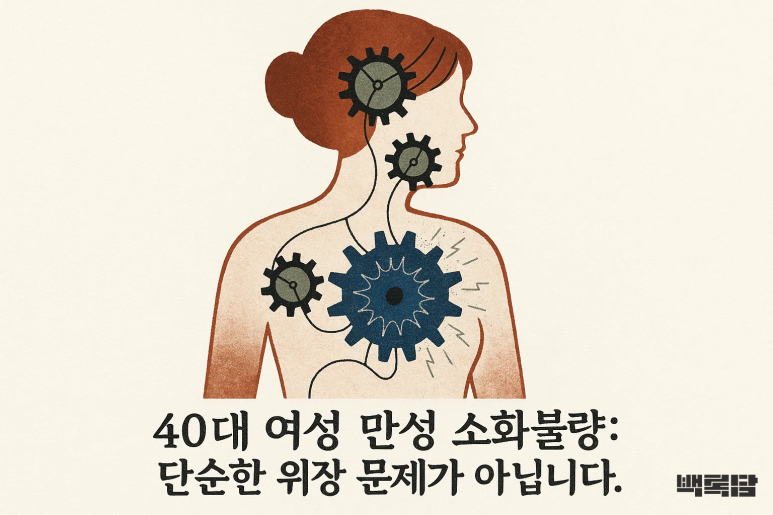
Appetite is not simply feeling that the stomach is empty; it is a complex biological circuit that leads from the gastrointestinal tract → hormones → autonomic nerves → brain → motivation → action.
Literally, appetite is a signal that the entire body is functioning. If any one of these is blocked, one will not feel hungry, will not want to eat, and may not even react when seeing food.
To restore appetite, we must first find where the problem started within this circuit.
No Appetite vs. No Thought of Food – Where is the Break?
When an elderly person says, “I don’t want to eat,” it is important to know exactly what those words mean.
Having no appetite is different from not thinking about food.
Having no appetite is a state where the physiological signals of ‘hunger’ itself—such as stomach contraction, gastric acid secretion, and hormonal stimulation—do not occur. This may mean that the body's energy system, such as the function of the spleen and stomach, Qi deficiency, or Kidney Yang deficiency, is shutting down.
On the other hand, not thinking about food means that the motivational system in the brain that connects to the action of eating is not working. Associations and reactions to meals disappear due to depression, a sense of loss, loneliness, or decline in cognitive function.
Although the symptoms in the two cases may look similar, the approach is completely different. The former requires stimulating the gastrointestinal tract and reinforcing energy, while the latter must focus on restoring emotional connections and recovering the motivation to eat.
Perspective of Dongui Bogam – “Appetite is an Indicator of Vital Energy”
In the classic Korean medical text 『Dongui Bogam』, there is a sentence: “If there is an illness but appetite remains, it is an external contraction; if appetite decreases, it is internal damage.”
This means that appetite is not simply a matter of the stomach, but an indicator of whether the ‘Jeong-gi’ (vital energy), the central energy of our body, is alive or fading. In other words, appetite is a sign of vitality.
The loss of appetite can be a signal that the functions of the entire body are already shrinking. If we simply accept it as “you just have no appetite,” we may miss important changes.
What Types of Loss of Appetite Exist in the Elderly?
Loss of appetite in the elderly appears in various pathological types.
- Spleen and Stomach Deficiency Type: Digestive power is low, leading to bloating and lack of energy even after eating very little.
- Liver Qi Stagnation Type: Cases where the thought of food itself disappears due to depression and lethargy.
- Phlegm-Dampness Type: Severe indigestion or chest tightness after eating; Stomach Heat Type: Heartburn and discomfort remaining after eating.
- Qi and Blood Deficiency Type: A type where the body becomes weak, causing dizziness and severe fatigue, and the will to eat disappears.
As such, loss of appetite cannot be solved with a single health supplement. We must see where the circuit was broken and apply the appropriate approach.
Restoration to Action – To Make Them Eat
The starting point for recovering appetite is not knowing ‘why they aren’t eating,’ but ‘where it stopped.’
If they are not hungry, the gastrointestinal tract must be stimulated; if they feel unpleasant after eating, the gastrointestinal function must be restored; and if they do not think of food at all, emotional connection and a social dining environment
It must be restored.
If we simply dismiss elderly loss of appetite as "just aging" and leave it untreated, it can lead to sarcopenia, falls, cognitive decline, recurrent infections, and even decreased survival rates. Appetite is the frontline of survival.
Appetite is the language of vitality
L loss of appetite in the elderly is not simply a matter of picky eating—it may be the body, mind, and physiological systems saying "it's okay to stop here." We must not dismiss this signal lightly.
Before asking "Why aren't you eating?", we should ask "Where did it all start to decline?" That question is the true starting point for restoring appetite.
Thank you.
#ElderlyLossOfAppetite #LossOfAppetite #IncheonLossOfAppetite