
Symptoms of Pityriasis Rosea - Herald Patch and Christmas Tree

Table of Contents
- 1. "Isn't this just hives?"
- 2. Characteristics of Pityriasis Rosea— The Herald Patch, and the Christmas Tree
- 3. Why Does It Last So Long?— A Different Immune Pathway Than Hives
- 4. Slow Recovery in Pityriasis Rosea— A Tissue Response That Is Not Deep but Is Extensive
- 5. The Two Conditions Only Look Similar on the Surface, But Are Completely Different Inside
- 6. Waiting is part of the treatment for pityriasis rosea
1. "Isn't this just hives?"
The onset of pityriasis rosea can easily be misunderstood like this
One day, suddenly, a red patch about the size of a palm appears on the chest or back. The surface may be slightly scaly, and the center may appear somewhat faded. At first, you might think it's just dry skin and dismiss it as nothing serious. But after a few days, or perhaps a week, small rashes begin to appear one by one around it. They itch, and the red patterns spread, so most people think things like this: "Is this hives?" "Could it be an allergic reaction that came up after a cold?" But the disease with the real name at this point is pityriasis rosea, pityriasis rosea. As the name "rose-colored" suggests, the rashes have a pale pink hue, and as "pityriasis" suggests, it is relatively mild but has the characteristic of spreading systemically. The problem is that this disease does not disappear within a few days like ordinary dermatitis. It can persist for at least 4 weeks, or as long as 8 to 12 weeks. And if you don't know the exact cause or mistake it for hives and overlook it, the confusing and frustrating time only drags on longer.
2. Characteristics of Pityriasis Rosea— The Herald Patch, and the Christmas Tree
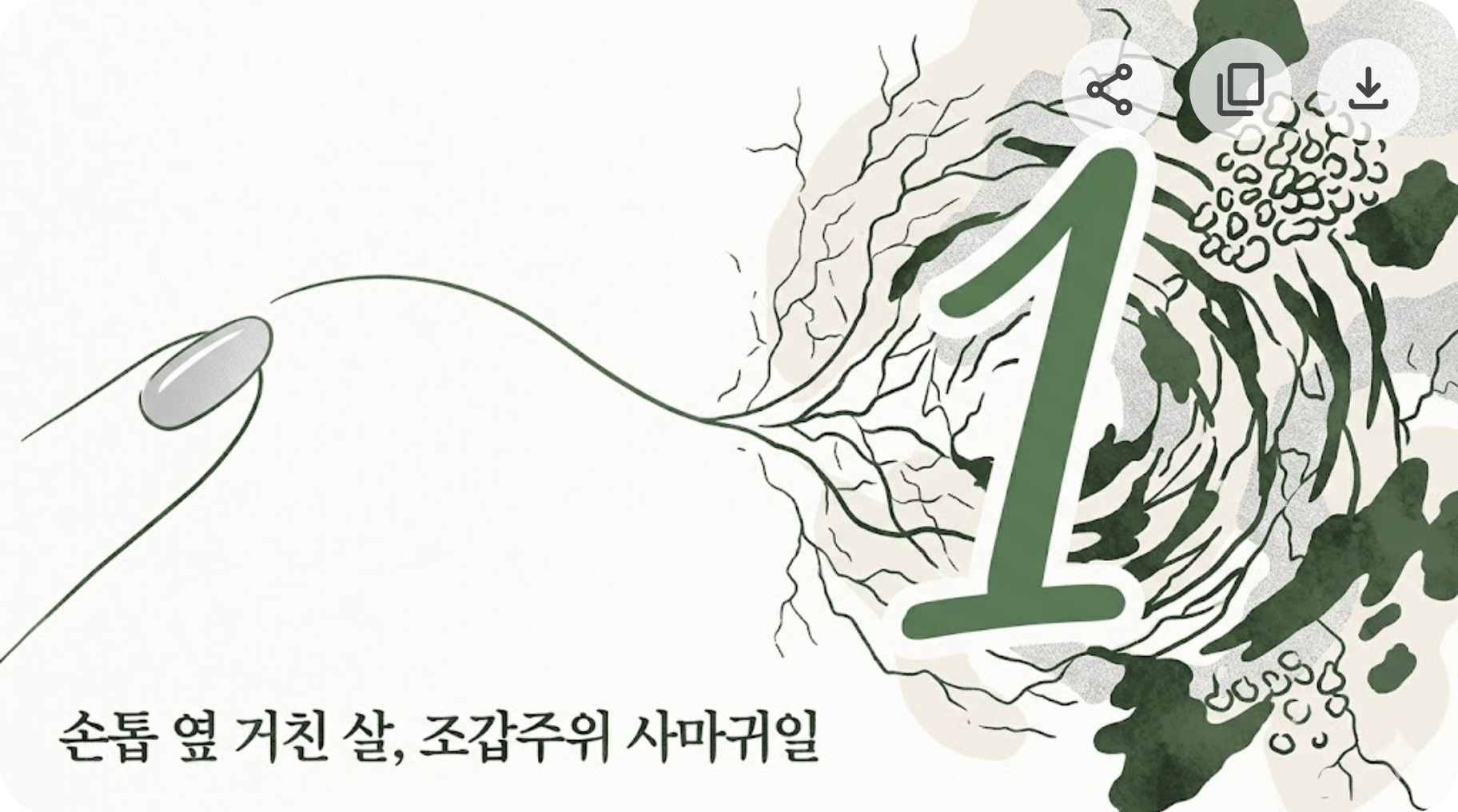
Pityriasis rosea has a distinctive onset. This is the initial lesion called the herald patch (Herald patch). Typically, a single oval-shaped red patch about 2~5cm in size appears on the trunk, especially on the chest or back. It appears first, like a flag announcing the other lesions that will spread later.
Within 12 weeks, small oval rashes appear in a row on the trunk following the herald patch. Because this arrangement follows the skin's lines of tension (Langer's lines), it appears to spread in a branch-like pattern resembling a Christmas tree. This distinctive arrangement is a pattern that appears almost exclusively in pityriasis rosea. In other skin diseases, such an orderly directional lesion arrangement is rarely seen. It's not just that the shape is unique—the mechanism behind it involves an immune response spreading along the anatomical structure of the skin.
3. Why Does It Last So Long?— A Different Immune Pathway Than Hives
Now let's get to the main point. Why does pityriasis rosea last so long? The same skin lesions—why don't they disappear within hours like hives, but persist for weeks? The answer lies in the nature of the immune response and the depth of tissue involvement. Hives are an immediate-type immune response (type I hypersensitivity). In this reaction centered around histamine, when mast cells in the body are stimulated, they secrete histamine, which dilates blood vessels, and plasma components leak out through the gaps, causing the skin to swell, itch, and feel hot. This reaction occurs very quickly and also disappears very quickly. This is because histamine itself is metabolized and disappears within a few hours. Moreover, this reaction occurs only near the skin blood vessels, in the upper layer of the dermis, so there is almost no tissue damage, and recovery is like water being absorbed. So hives are a reaction that merely brushes past the skin like an echo. It leaves almost no trace.
4. Slow Recovery in Pityriasis Rosea— A Tissue Response That Is Not Deep but Is Extensive
That is, the central players are T cells, not histamine. And this response is much more complex and, above all, takes much longer. Initially, the body has been infected with a virus (mainly HHV-6 or 7), or a previously infected virus has been reactivated, causing T cells to begin triggering an inflammatory response in the skin. However, this T cell response occurs at the boundary where the dermis meets the epidermis, the uppermost layer of the dermis. This area is where the skin's protective barrier is most sensitive, and where epidermal keratinocytes and dermal immune cells directly interact.
Ultimately, while the inflammation does not destroy the skin deeply, it spreads widely and superficially, causing desquamation of the epidermis, and in some areas leaves behind pigmentation or tissue damage. Such a response does not turn off quickly like histamine. It is inevitable that it takes weeks to months for T cell immune memory to fade, for the immune response to stop on its own, and for the damaged epidermis to regenerate.
5. The Two Conditions Only Look Similar on the Surface, But Are Completely Different Inside
Both hives and pityriasis rosea may appear when the body is weakened, as with a cold, or
It can occur after medication, stress, or viral triggers. And both can cause rashes to appear on the skin, itching, and sometimes spreading. However, the speed of the immune response, the depth of tissue damage, and the complexity of the recovery process are completely different. Urticaria is an immune system "startled reaction" that happens in an instant, while pityriasis rosea is the immune system sending slow, quiet, but deep structural signals. So urticaria is like a fire that flashes and goes out, while pityriasis rosea is like a log fire that slowly spreads and then goes out.
6. Waiting is part of the treatment for pityriasis rosea
When diagnosed with pityriasis rosea, most people are told this. "It will get better on its own." "It will be fine if you just wait." That is correct. However, that does not simply mean "it will heal if you wait." It means giving your immune system time to resolve this issue on its own. The patient is enduring the process of watching and giving the skin an opportunity to recover on its own. Since there is no quick and clear solution like with urticaria, pityriasis rosea quietly responds along the deep circuits of the skin, and then quietly disappears. The best attitude for understanding this condition is not to be impatient, and to trust the flow of the immune system and wait patiently.
#PityriasisRosea #PityriasisRoseaSymptoms #IncheonPityriasisRosea