
Digestive Discomfort and Bloating?

Ah, indigestion... what a troublesome problem. In Korean medicine, this is sometimes viewed as "giheo (氣虛)" or "seupjeok (濕積)", and at other times interpreted as a result of "imbalance between yin and yang". That's right, there's a need to listen carefully to the signals your body is sending. As we share stories together, we'll be able to talk comfortably just like old friends.
"Why is it that only I can't digest properly?"
Our bodies are truly wondrous. Even when eating the same food, some people are perfectly fine while others feel uncomfortable. Korean medicine often explains this in relation to "body constitution". Yes, just as each of our bodies produces a different tone like musical instruments, our digestive systems also vary slightly from person to person. Some are sensitive to flour-based foods, while others have difficulty digesting greasy foods. This is proof that our bodies are each telling a different story.
"How does Korean medicine view indigestion?"
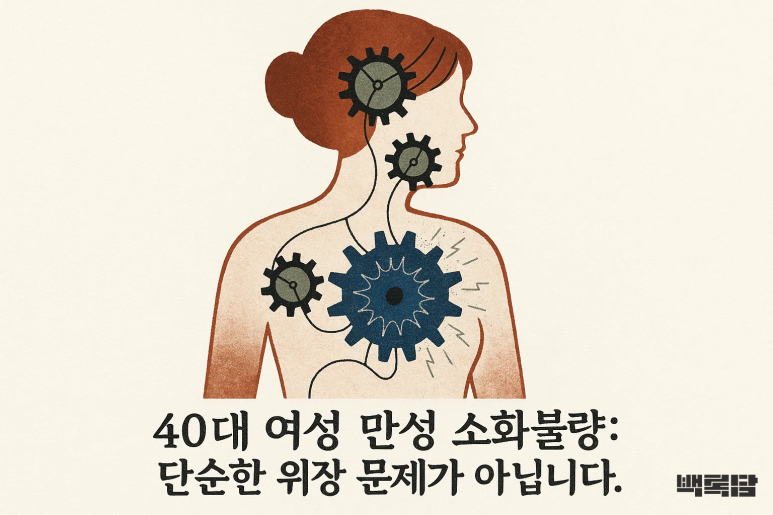
In Korean medicine, indigestion is not simply seen as "food not going down well." It is viewed as a symptom that appears when the body's "gi (氣) flow" or "the power that transports and transforms food" becomes weak. Therefore, we focus on treatment that replenishes giheo (氣虛) in the body, removes seupjeok (濕積), and balances yin and yang. It's like paying attention to tuning each instrument to create harmonious music.
"So what does the actual treatment look like?"
Treatment methods vary widely. Starting from methods that replenish the body's gi and remove dampness through herbal medicine, to methods that smooth the body's gi pathways using acupuncture. Like tailoring custom-made clothes, treatment methods are determined to match each patient's body condition and constitution. Communication with the patient during this process is truly important. We must consider everything from the patient's daily life, eating habits, and even stress levels.
"Can I get better right away with treatment?"
Honestly speaking, there are cases where improvement happens right away, but there are also cases where it takes some time. However, what is certain is that through Korean medical treatment, we strive to address the fundamental cause. Sometimes, conversations in a treatment room where the subtle aroma of herbal medicine drifts through can also be of great help in healing both body and mind. Witnessing that gradual recovery process together is truly a precious experience.
If you are dealing with the problem of indigestion, please don't suffer alone. Our bodies send far more complex and subtle signals than we think. Let's interpret those signals together and discover what your body and mind truly want. Korean medicine can be of great help in this process. Like a conversation with an old friend, I want to hear your story. Let's take steps together toward a healthier life.