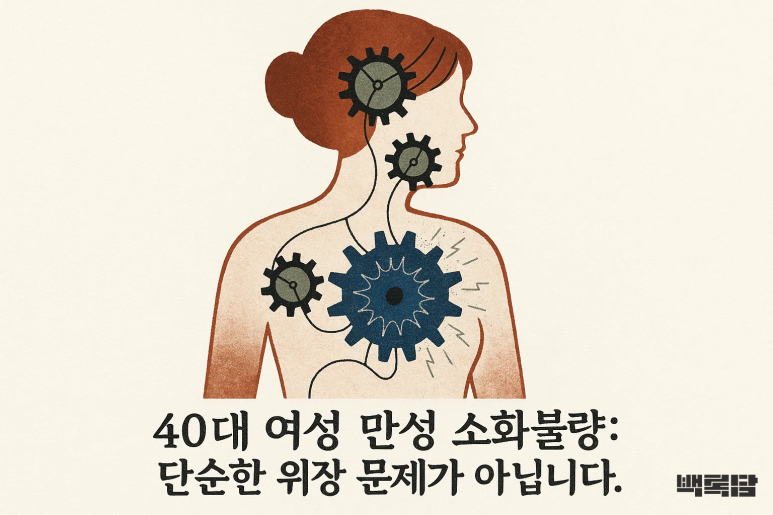

Chronic Gastritis: Experiencing Sharp Stomach Pain?

Table of Contents
Hello, I am Yeon-Seung Choi, the Lead Director of Baengnokdam Korean Medicine Clinic.
Symptoms
"For a month now, every time I eat, my stomach feels like it's being stabbed. I was prescribed digestive medication and have been taking it for over two weeks, but it's not getting better."
Many people suffer from this kind of chronic stomach pain.
Gastritis is a common condition, affecting over 10% of the entire population, but if it develops into chronic gastritis lasting over 3 months, it can cause significant discomfort in daily life.
Causes
Gastritis is an inflammation of the stomach lining. In cases of acute gastritis, symptoms often resolve quickly and are temporary, but chronic gastritis does not heal easily and persists for a long time.
Therefore, for patients with chronic gastritis, rather than simply suppressing symptoms with medication, it is important to identify and treat the root cause and manage it.
"I used to cope with work stress mainly by eating. After work, I would always get spicy food for takeout and have it with a beer."
Patients with chronic gastritis often have lifestyle habits that strain their stomach due to irregular eating habits, excessive stress, and frequent alcohol consumption.
When such situations are repeated, gastric acid secretion increases and the gastric mucosa gets damaged, which becomes the main cause of chronic gastritis.
Korean Medicine Treatment
At Baengnokdam Korean Medicine Clinic, we comprehensively diagnose the constitution and lifestyle habits of these chronic gastritis patients and prescribe customized herbal medicine.
Our treatment policy is not merely to focus on improving gastrointestinal symptoms, but also to restore overall body balance along with gastrointestinal function recovery, thereby aiding in fundamental healing.
"The pain has definitely decreased, and by combining it with dietary management, I feel like my body has finally regained its health."
In fact, many people who received treatment at Baengnokdam Korean Medicine Clinic experienced an improvement in gastritis symptoms, along with a disappearance of fatigue and an improvement in their overall condition.
Furthermore, they often show bright smiles, saying that they no longer need to be selective about what they eat, and their improved digestive function allows them to properly enjoy meals.
However, if chronic gastritis is left untreated for a long time, the risk of it progressing to stomach cancer also cannot be overlooked.
In its early stages, it might be felt as mild pain, but if symptoms gradually worsen, it can lead to appetite loss, vomiting, anemia, and other issues.
Therefore, we recommend that those suffering from chronic gastrointestinal symptoms seek active treatment through a consultation. Baengnokdam Korean Medicine Clinic provides personalized treatment programs for each patient to help them achieve rapid symptom improvement and regain a healthy, recurrence-free daily life.
Don't give up on your stomach pain; contact Baengnokdam Korean Medicine Clinic right now. Thank you.