
Functional Dyspepsia: The Hidden Story

Table of Contents
Functional Dyspepsia: Uncovering Its Hidden Story. Ah, functional dyspepsia. It's a condition I hear about so often among my patients. Like cherry blossom petals scattered by the spring breeze, it's something subtle yet constantly impacting our daily lives. Complaints of "my stomach hurts" or "I can't digest well" are heard everywhere. But, you know, this goes beyond just a simple 'stomach ache.' So today, I'd like to delve deeper into this unwelcome guest, functional dyspepsia.
"Why Is This Happening Only to Me?"
I hear this question so often. Functional dyspepsia, you see, is a tricky condition to diagnose. Because it's difficult to find any specific abnormalities with endoscopy or blood tests, patients often feel like they are suffering alone. But in reality, it's quite common. However, "it's common, so it's okay" isn't the right attitude. Each person's pain is unique and incomparable.
"Is It My Mind That's Hurting Too?"
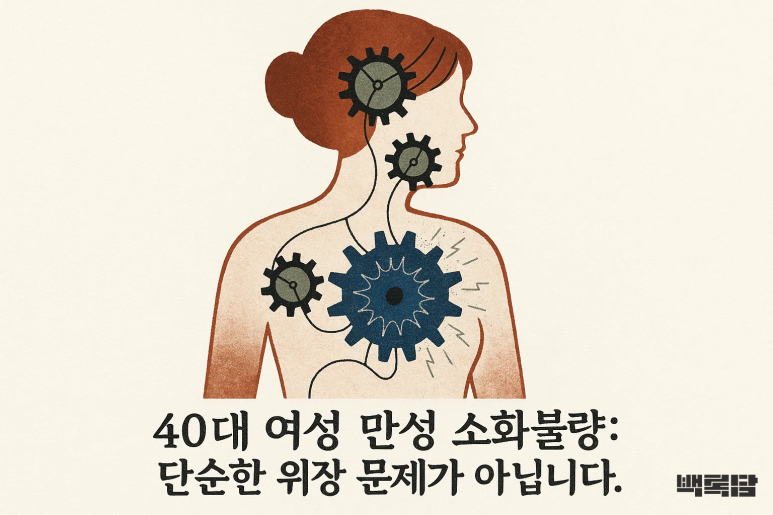
Actually, the answer to this question is 'it's possible.' In Korean traditional medicine, we view the body and mind not as separate entities but as interconnected. The link between mind and body – this is the core of psychoneuroimmunology. Stress or emotional issues can affect the digestive system. Emotional wounds can manifest as stomach pain. It's as if the body responds directly to what the mind dictates.
"How Does Korean Traditional Medicine Treat It?"
When Korean traditional medicine addresses functional dyspepsia, it doesn't just look at the symptoms. It starts with 'Why did these symptoms appear?' The focus is on correcting imbalances in the body and mind and restoring natural flow. We regulate the flow of Qi and Blood to improve digestive function, while simultaneously promoting mental stability. To achieve this, we utilize methods such as herbal medicine, acupuncture, and meditation. We believe that true healing occurs when all of these elements are harmoniously integrated.
"How Long Does Treatment Take?"
This is truly a question like 'how many cherry blossom petals must fall for spring to fully arrive?' It varies depending on each individual's physical and mental state, lifestyle, stress levels, and so on. Many people often think that Korean traditional medicine treatment takes time, and that's because it addresses the fundamental causes. It's not about suppressing symptoms in the short term, but rather a process of re-establishing balance between the body and mind. Sometimes improvements occur quickly, but for some, it might be a longer journey.
Lastly
To those experiencing functional dyspepsia, I have something I'd like to say. This path may be a bit rough and lonely, but you are not alone. Our body and mind are constantly communicating. Sometimes it can be difficult to understand the way they communicate, but the journey of finding balance within that is precisely the process of healing. I hope that through this process, you will come to understand your own body and mind more deeply and find your unique balance. I am also ready to walk that journey with you. Let's walk that path together.
#IncheonFunctionalDyspepsia