
Psoriasis Treatment: From Elbows to Entire Body

Table of Contents
- Table of Contents
- 1. Psoriasis, a Shadow Cast on the Skin of Life
- 2. The Pathogenesis (Byeongin) of Psoriasis Triggered by Changes in Blood (Hyeol)
- 3. Improving Blood (Hyeol) Circulation is Key to Psoriasis Treatment
- 4. Acupuncture and Moxibustion Therapy for Regulating Skin and Zang-fu Organ Function
- 5. Lifestyle Management Helps Improve Psoriasis Symptoms
- 6. A Voyage of Hope Towards Beautiful Skin
Hello, this is Chief Director Choi Yeon-seung from Baekrokdam Korean Medicine Clinic.
Today, I would like to talk about psoriasis, known as an intractable skin disease.
Table of Contents
- Psoriasis, a Shadow Cast on the Skin of Life
- The Pathogenesis of Psoriasis Triggered by Changes in Blood (Hyeol)
- Improving Blood (Hyeol) Circulation is Key to Psoriasis Treatment
- Acupuncture and Moxibustion Therapy for Regulating Skin and Zang-fu Organ Function
- Lifestyle Management Helps Improve Psoriasis Symptoms
- A Voyage of Hope Towards Beautiful Skin
1. Psoriasis, a Shadow Cast on the Skin of Life
"At first, a few red spots appeared on my elbows,
then they gradually spread, covering my whole body with psoriasis symptoms.
My peeling skin looks unsightly, and I'm hesitant to wear short sleeves."
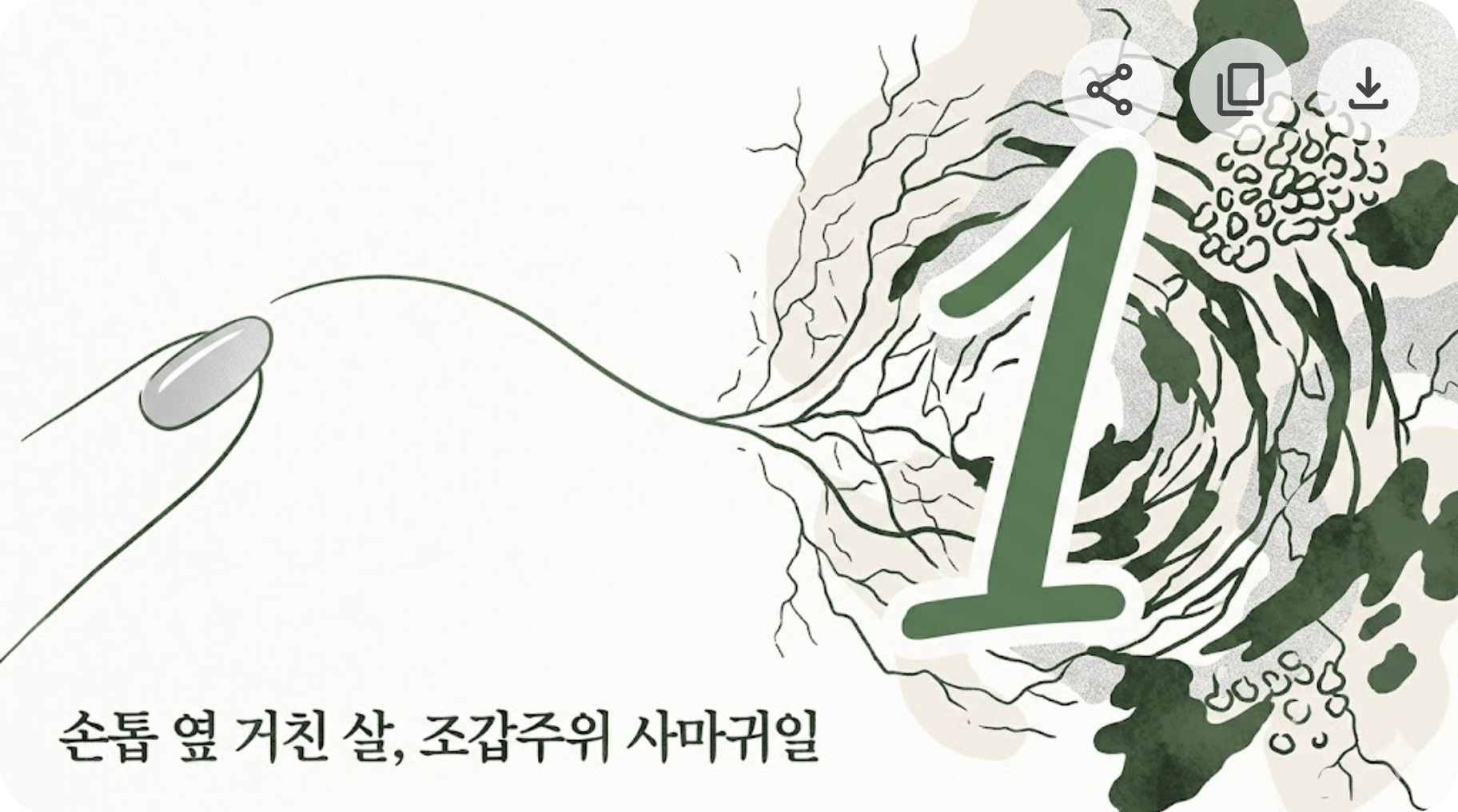
Psoriasis is a chronic inflammatory disease characterized by excessive proliferation of skin cells and abnormal keratinization. It primarily manifests as well-demarcated red skin lesions, typically covered with thick, silvery-white scales, often on joint areas such as the elbows and knees.
2. The Pathogenesis (Byeongin) of Psoriasis Triggered by Changes in Blood (Hyeol)
In Korean medicine, psoriasis is recognized under categories such as Baekbi (白疕) and Songpiseon (松皮癬). Changes in Blood (Hyeol) are considered a core mechanism for triggering skin symptoms. Therefore, pathological conditions of Blood (Hyeol), such as Blood Heat (Hyeolyeol), Blood Stasis (Hyeol-eo), Blood Dryness (Hyeoljo), and Blood Deficiency (Hyeolheo), are crucial pathogenetic factors.
3. Improving Blood (Hyeol) Circulation is Key to Psoriasis Treatment
In herbal medicine treatment for psoriasis, the most important aspect is to manage the pathological state of Blood (Hyeol). The key is to differentiate the pattern (byeonjeung) into conditions such as Blood Heat (Hyeolyeol), Blood Stasis (Hyeol-eo), or Blood Deficiency (Hyeolheo), and then apply appropriate prescriptions to improve blood circulation and eliminate Heat-Toxin (Yeoldok).
4. Acupuncture and Moxibustion Therapy for Regulating Skin and Zang-fu Organ Function
Acupuncture therapy significantly aids in improving skin conditions by facilitating the smooth flow within the Meridians (Gyeongrak). In psoriasis treatment, crucial aspects include not only the improvement of skin lesions but also the enhancement of overall systemic health and the prevention of recurrence.
5. Lifestyle Management Helps Improve Psoriasis Symptoms
In addition to Korean medicine treatment, improving lifestyle habits also greatly helps alleviate symptoms. Above all, achieving psychological stability is paramount. Efforts are needed to avoid stressful situations and regain peace of mind.
6. A Voyage of Hope Towards Beautiful Skin
"With Korean medicine treatment, my psoriasis symptoms are noticeably improving.
The red skin lesions have significantly subsided, and the scaling has also decreased.
Most importantly, I'm happy to have regained confidence in my life."
Overcoming psoriasis is by no means an easy task. It is a challenging journey through a long tunnel of recurring improvements and exacerbations. However, as long as one does not give up, there will always be a solution.