
An exhausted body after childbirth, which postpartum diet method is safe?

An exhausted body after childbirth, which postpartum diet method would be safe?
“Doctor, I feel like my body is completely ruined after having the baby. I just sigh every time I look in the mirror.”
These are the words that many postpartum mothers who visit the clinic say to me first.
|
“In the morning, my face feels like a water-soaked sponge. When will the swelling go down?” The increase during pregnancy inblood volume and body fluidsdoes not come off easily even after childbirth, andDameum (phlegm-fluid)' oredemamay appear as '. Along with this, prolactin such as lactation hormones appetite signalsalso affects. |
After childbirth, a woman's body tremendous changesundergoes.
Hormones change rapidly, like riding a rollercoasterand breastfeeding andlack of sleepexhaust the body and mind.
Parenting stress is another hidden obstacle to weight managementas well.
In all these situations, recovering 'myself' safely and healthily Postpartum diet has a meaning that goes beyond simple weight loss.
Indeed, which method would be right and safe for me?
I would like to share the methods that I contemplate and design together with patients in the consultation room.
After childbirth, why has my body changed?
The body of a woman who has experienced pregnancy and childbirth is not 'reset,' but rather a 'a new environment' is encountered.
recovery of the uterus, stabilization of the widened pelvis, and most significantly, hormonal changesoccur.
Additionally,fragmented sleep for three to four hours a dayincreasescortisol levels, promoting fat accumulationcan do.
If lack of sleep persists, our body's metabolic flexibility is bound to decreaseis.
Understanding these changes is The first step in postpartum weight lossis.
These physical changes go beyond simply gaining weight, hindering the body's recovery andmaking postpartum obesity management more difficult creates.
An urgent heart, but safety comes first
“I want to go back to my old body within a month.” I fully understand this earnest desire.
However, the body immediately after childbirth is Recovery is the most importantthing.
Nutritional deficiency or excessive exercise can lead to greater side effects in the long term.
|
A patient in her late 30s who gave birth 2 months months postpartum for a breastfeeding diet extreme dietary restrictions and high-intensity exercisehave started. Weight quickly 5kg decreased, but breast milk volume dropped sharply and chronic fatigue and hair lossended up suffering from Eventually, the rapid weight loss stopped, and thereafter stress-induced binge eatinginstead 7kghas increased again. The correction point was ‘ignoring the body's recovery signals’. In the beginning, light walking exercises and protein-centered nutritional intakeshould be focused on, prioritizing recovery. |
As in this case, Impatience can instead become poison.
Our bodies are bound to resist sudden changes.
|
After childbirth within 6 monthsof rapid weight lossmay interfere with the supply of nutrients necessary for breastfeeding or hinder the overall recovery of the body. Especially,starvation diets or one-food diets that involve consuming only specific foodsshould be avoided. Carelessly muscle loss may be induced, adversely affecting long-term metabolic healthcan have an effect. must consult with professional medical staffto [determine] a [treatment] that fits the individual's health condition a safe diet planis important to establish. |
Especially if you are breastfeeding, you must be more cautious as it can also affect the baby.
Then, within these constraints, how should you establish a safe diet plan that is right for you?
How do I find the postpartum diet that is right for me?
No two bodies are the same after childbirth.
Breastfeeding status, the mother's recovery speed, sleep patterns, childcare environment All these factors must be considered.
|
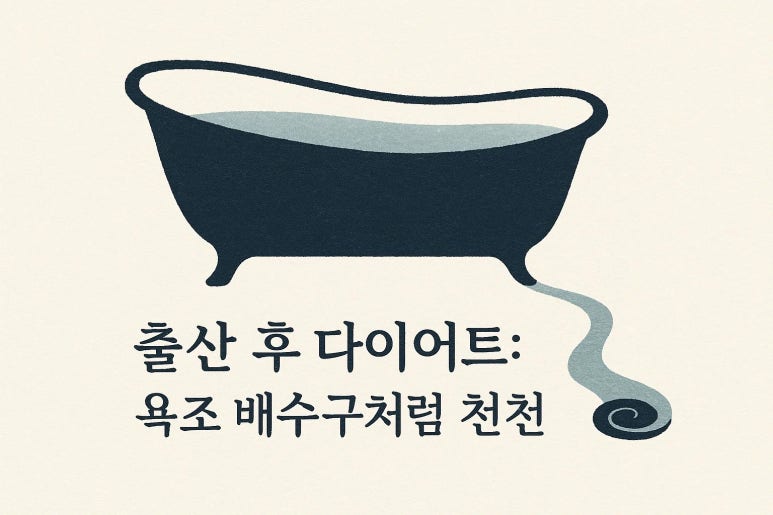
Recovery of the body after childbirth is like a marathon. the first 3 monthsfocus on recovery, and thereafter 3 monthsit is recommended to strive for gradual correction of lifestyle habits. In other words, at first 6 months as recovery and preparation period as, ‘bathtub drainit is wise to control the rate of weight loss as if gradually opening ' This is like opening the drain of a full bathtub wide open from the start, which can make the current too strong or put strain on the plumbing. Since the body after childbirth is in the important process of recovery, the drain should be opened little by little and gradually to induce the water to flow out smoothly. In other words, rather than rapid loss, a weekly "0.5kg a gentle pace of aboutfocusing on restoring the balance of a healthy body is much more beneficial in the long term.** |
Listen to your body's voice.
In terms of Korean medicine, Qi, Blood, and Body Fluids' recovery is supported, and the Spleen and Stomach (digestive system)' functions, andDameum' is approached in a direction to resolve it.
In modern terms, Sufficient protein intakeis per body weight 1kgper 1.2~1.5gas a goal, A healthy diet focused on low carbohydrates, and more than 30 minutes a dayof **light activity NEAT** is recommended.
Stress managementis also important.
Some people express it by saying, “I feel stifled and angry, like Hwabyung.”
Stress is not simply a matter of the mind. Due to childcare,lack of sleep and an irregular lifestyleaffect our body's 'HPA axis (hypothalamic-pituitary-adrenal axis)'continuously stimulates, and thisincreases cortisol levels, inducing abdominal fat accumulationbecomes a major factor. Chronic stress also affects appetite regulation, which may lead to seeking sweet foods or binge eating.
Key paths for sustainable recovery and weight management
In the end, postpartum diet is A process of reorganizing the universe called 'me'it is.
Setting aside the urgent mind for a moment, a personal plan that can be practiced consistentlyis important.
|
Step 1 prioritizes the recovery of the bodyafter childbirthfor 3 months and proceeds focusing on rest, sufficient nutritional intake, and light stretching. Step 2 is the check and correction of lifestyle habitsafter childbirth for 3 to 6 monthssecuring regular meal times, a protein-centered diet, efforts to stabilize sleep patterns, within 30 minutes includes starting aerobic exercise. Step 3 is the start of gradual weight loss after childbirth After 6 monthsThe goal is to gradually increase exercise intensity suitable for oneself, maintain a healthy diet, and establish a stress management routine. |
In my clinical experience, patients who have steadily followed this pathfundamental changes in the body without obsessing over short-term figureswas able to elicit.
The goal is not simply to reduce the weight number, but to cultivate the strength to sustain a healthy life as a mother.
Postpartum diet is a process of loving and taking care of oneself.
Rather than stimulating promises, listen to the signals your body is sending and Try a small changetoday.
Even if it is a bit slow, the path of moving forward steadily is the **most safe and sustainablepostpartum dietI am confident that it is the path leading to**
Because when the mother is healthy, the whole family is happy.
I will accompany you on the journey to find the balance between body and mind.


